Free Printable Puppy Training Schedule by Age
A puppy training schedule maps out what to teach each week as your puppy grows. From 8 to 24 weeks, the focus shifts from settling in, name recognition and potty routine to socialization, leash skills, and later self-control cues like wait and stay — with short 3–5 minute sessions built around potty breaks, meals and naps.
The week-by-week plan from our puppy training schedule guide, formatted for the fridge. Print it, tick off each week as your puppy nails it, and jot your own times in the daily routine.
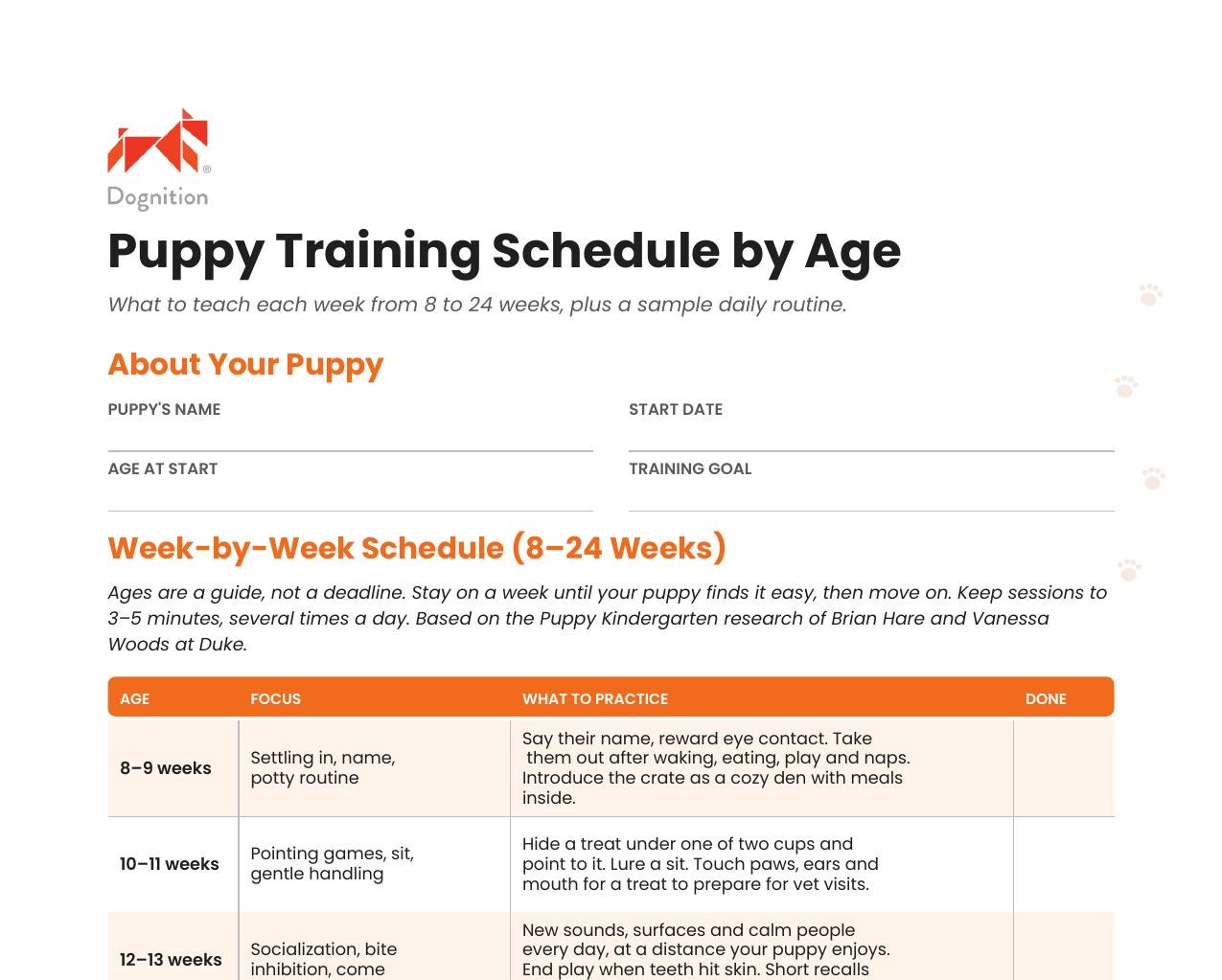
What's on the printable
- Week-by-week training plan from 8 to 24 weeks with a Done checkbox
- A sample daily routine with space for your own times
- Three quick tips from the Puppy Kindergarten research
- A notes box for wins and weeks that need a repeat
- Puppy name, start date, age and training goal
What's on the schedule
The schedule follows the same ages as our guide: settling in and the potty routine at 8–9 weeks, pointing games and gentle handling at 10–11 weeks, socialization and coming when called at 12–13 weeks, leash skills and short alone time at 14–16 weeks, self-control cues at 17–20 weeks, and real-world practice at 21–24 weeks.
It's built on the Puppy Kindergarten research of Brian Hare and Vanessa Woods at Duke — including the finding that many puppies can follow a human point from a very young age, before any training. Read the full science in the puppy training schedule guide, and pair this printable with the Puppy Potty Training Log and the Puppy Kindergarten Starter Checklist.
Fill out online & print
Puppy Training Schedule by Age
Saved only in this browser. Nothing you type is sent to Dognition.
About Your Puppy
Week-by-Week Schedule (8–24 Weeks)
Ages are a guide, not a deadline. Stay on a week until your puppy finds it easy, then move on. Keep sessions to 3–5 minutes, several times a day. Based on the Puppy Kindergarten research of Brian Hare and Vanessa Woods at Duke.
| Age | Focus | What to practice | Done |
|---|---|---|---|
| 8–9 weeks | Settling in, name, potty routine | Say their name, reward eye contact. Take them out after waking, eating, play and naps. Introduce the crate as a cozy den with meals inside. | |
| 10–11 weeks | Pointing games, sit, gentle handling | Hide a treat under one of two cups and point to it. Lure a sit. Touch paws, ears and mouth for a treat to prepare for vet visits. | |
| 12–13 weeks | Socialization, bite inhibition, come | New sounds, surfaces and calm people every day, at a distance your puppy enjoys. End play when teeth hit skin. Short recalls indoors. | |
| 14–16 weeks | Leash, down, short alone time | Leash on indoors, reward walking beside you. Lure a down. Practice a few minutes of calm alone time with a chew. | |
| 17–20 weeks | Self-control: wait, leave it, stay | Wait at doors and food bowls, leave it with a covered treat, a few seconds of stay. Expect some backsliding while teething. | |
| 21–24 weeks | Real-world practice and polish | Take known cues to new places with more distraction. Keep sessions short and celebrate the easy wins. |
Three Things to Remember
- Several 3–5 minute sessions a day beat one long lesson. Stop while your puppy still wants more.
- Train right after a potty break and before a nap, when your puppy is alert but not overtired.
- Puppies can follow a human point from a very young age. Pointing and name games build attention.
Track house training: Puppy Potty Training Log — dognition.com/puppy-potty-training-log
Socialization roadmap: Puppy Kindergarten Starter Checklist — dognition.com/puppy-kindergarten-checklist
A Sample Daily Routine
Build the day around potty breaks, meals and naps. Adjust the times to your household.
| When | What | Your times |
|---|---|---|
| Wake-up | Straight outside to potty, then breakfast | |
| After breakfast | Potty break, 3–5 minutes of training, play | |
| Mid-morning | Nap in the crate or pen | |
| Midday | Potty, lunch, a short socialization outing | |
| Afternoon | Nap, potty, a pointing or name game | |
| Evening | Dinner, potty, calm play and handling practice | |
| Bedtime | Last potty break, then quiet crate time |
Notes & Wins
Every puppy develops at their own pace. If something isn't working, go back a week and build up again. Ask your vet before socialization outings if vaccines aren't complete.
Frequently asked questions
- What should I teach my puppy each week?
- From 8–9 weeks, focus on settling in, their name and the potty routine. Around 10–11 weeks add pointing games, sit and gentle handling. At 12–13 weeks prioritize socialization, bite inhibition and coming when called. From 14–16 weeks introduce the leash, down and short alone time. Self-control cues like wait, leave it and stay fit best at 17–20 weeks, and 21–24 weeks are for practicing known cues in new places.
- When can I start training my puppy?
- You can start the day your puppy comes home, usually around 8 weeks. Keep it playful: name games, pointing games and a potty routine. In Puppy Kindergarten, Vanessa Woods and Brian Hare describe how much puppies are already learning about people in these first weeks.
- How long should puppy training sessions be?
- Several 3–5 minute sessions spread through the day work far better than one long lesson. Stop while your puppy still wants more, and train right after a potty break and before a nap, when your puppy is alert but not overtired.
- What if my puppy is behind the schedule?
- That's fine — the ages are a guide, not a deadline. Stay on a week until your puppy finds it easy, then move on. If something isn't working, go back a week, make it easier and build up again.
- Is the puppy training schedule free and fillable?
- Yes. It's a free fillable PDF with no email or account required. You can also fill it out online and print it, and nothing you type is stored on our servers.