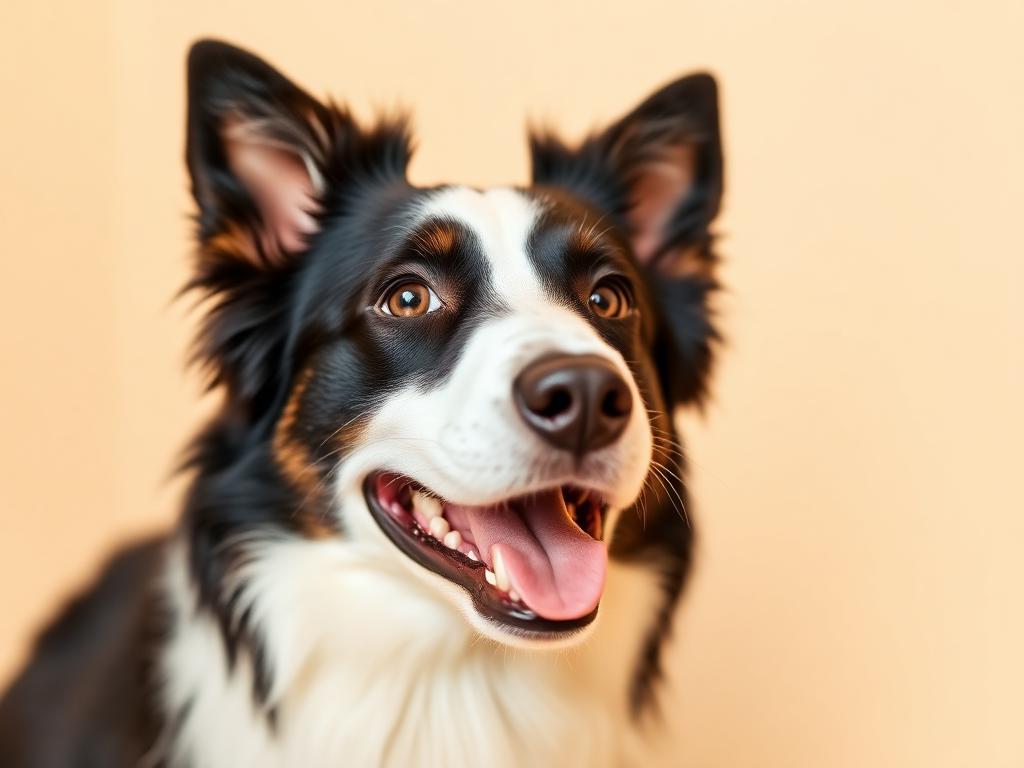
Border Collies
Aggregated data shows a tendency toward strong Reasoning and Memory, likely linked to generations of working-dog selection.
Every dog owner wants to know. Dr. Brian Hare spent decades at Duke University's Canine Cognition Center finding the real answer — and it's not a ranking.
For years, "smartest dog breed" lists have ranked dogs the same way we might rank IQ scores — as if intelligence were a single number. But Dr. Brian Hare's research changed that thinking. Dogs, like people, have different kinds of smart. A Border Collie's herding instincts and a Basenji's independent streak aren't better or worse — they're different cognitive strategies, shaped by different histories.
That's why Dognition doesn't measure one score. We measure five dimensions: Empathy, Communication, Cunning, Memory, and Reasoning. Every dog is a unique combination of all five — which is exactly what makes them family, not a leaderboard entry.
There has never been a global study of cognition across dogs and breeds. That's exactly what Dognition's citizen science project is building — one household game session at a time.
Based on anonymized data from over 122,000 dogs assessed through CanineQ, certain breeds tend to show patterns in specific dimensions. These are population-level tendencies, not predictions about any individual dog — the only way to know your dog's actual cognitive profile is to test your dog.
Aggregated data shows a tendency toward strong Reasoning and Memory, likely linked to generations of working-dog selection.

Tend to show high Empathy and Communication scores in aggregated data, consistent with their role as companion and service dogs.

Often show strong Cunning — independent problem-solving — reflecting their history as a less domesticated, more self-reliant breed.

Frequently show balanced scores across Reasoning and Communication, reflecting versatility across original working roles.

Show the widest individual variation of any group — proof that breed alone doesn't determine a dog's cognitive profile.
Deeper cognitive profiles for the breeds people ask about most:
Remember: these are averages across thousands of dogs, not a verdict on yours. Individual dogs regularly defy their breed's typical pattern — which is the whole point of testing your own dog rather than relying on a list. Take the dog IQ test.
CanineQ is the first AI-powered platform analyzing real, individual canine cognitive data at scale — not surveys, not guesswork. Every dog who takes the Dognition Assessment contributes anonymized data to an ongoing citizen science project, helping researchers like Dr. Hare and Vanessa Woods understand canine cognition more precisely than ever before.
More ways to dive into the science of how your dog thinks.
See the full range of canine cognitive styles, from the Ace to the Stargazer.
Explore our cognitive profiles20 science-based games that reveal how your dog thinks, learns, and solves problems.
Explore our cognitive profilesWhich breeds tend to thrive with children — and the cognitive traits that matter more than breed.
Explore our cognitive profilesMeet Dr. Brian Hare and Vanessa Woods, and the research that started it all.
Explore our cognitive profilesWhat the science actually says about breed and intelligence.
Dr. Brian Hare's research suggests there is no single smartest dog breed. Intelligence in dogs is multidimensional — including Empathy, Communication, Cunning, Memory, and Reasoning — and different breeds tend to show different strengths.
No. Dognition does not publish breed rankings. Our assessment measures individual cognitive profiles across five dimensions, and aggregated data shows breed-level tendencies, not a definitive intelligence score.
Yes. Mixed breeds show the widest range of individual variation in our data. Breed is only one factor; an individual dog's assessment is the best way to understand their cognitive strengths.
The CanineQ assessment uses science-based games to evaluate five dimensions of cognition: Empathy, Communication, Cunning, Memory, and Reasoning. Each dog receives one of nine unique cognitive profiles.
Aggregated data shows patterns across thousands of dogs. It can reveal that a breed tends to score higher in a particular dimension, but it cannot predict how any individual dog will perform.
Averages can tell you what's typical. Only your dog's own assessment can tell you what's true about them.
Breed averages tell you little — these at-home games show how your individual dog actually solves problems.
Advanced vocabulary training and cognitive discrimination.
Boosts focus and relies heavily on scent discrimination.
Stimulates their natural tracking ability and provides deep mental exhaustion.
Builds a reliable emergency recall by making you the ultimate prize.