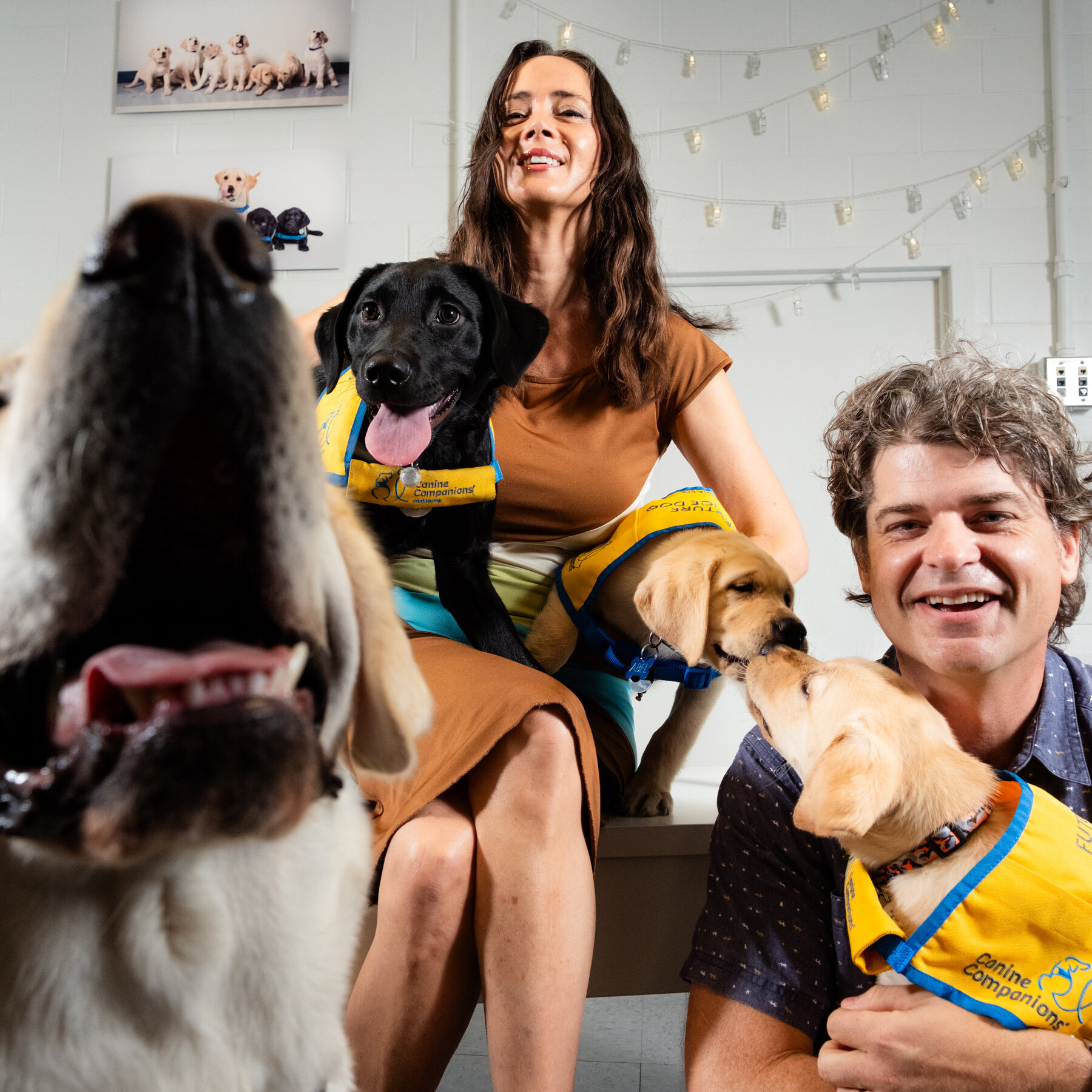
How Smart Is Your Dog? A Cognitive Guide to Celebrating National Dog Day

Every year on National Dog Day, millions of people do the same lovely things: an extra treat, a longer walk, a photo with #NationalDogDay. Your dog, being a dog, is delighted by all of it.
But here's a thought for this year. The single most meaningful gift you can give the animal sleeping at your feet isn't another biscuit. It's understanding — actually seeing the world the way your dog sees it. Because the dog you think you know has a mind that's stranger, richer, and more individual than almost anyone realizes.
This National Dog Day, don't just celebrate your dog. Meet your dog's mind.
First things first: when is National Dog Day?
National Dog Day is celebrated every year on August 26.
It gets a little confusing, so let's clear it up. National Dog Day was founded in 2004 by animal-welfare advocate Colleen Paige. The August date honors the day her family adopted their first dog from a shelter when she was a girl. You'll sometimes see "International Dog Day" or an August 14 date floating around online — but the widely observed date, the one retailers, shelters, and dog lovers rally around, is August 26.
The purpose has always been bigger than a hashtag: promoting shelter adoption, raising awareness for stray and abandoned dogs, honoring service, therapy, working, and search-and-rescue dogs, and encouraging responsible, informed pet ownership.
That last one — informed ownership — is where things get interesting.
Beyond the treat: why cognition is the real celebration
We tend to talk about dogs in one flat dimension: "good dog," "smart dog," "stubborn dog." But decades of research from the field of canine cognition — the science Dognition is built on — reveals something far more compelling.
Dogs aren't smart or dumb. They're smart in different ways.
Some dogs are geniuses at reading you — following your gaze, your gestures, your mood — but struggle to solve a physical puzzle on their own. Others are independent problem-solvers who'd rather work it out themselves than look to you for the answer. Some remember everything; some rely on cunning; some navigate the world through empathy. These aren't training outcomes. They're cognitive styles — the fingerprint of how an individual dog thinks.
This is why "how smart is my dog?" is actually the wrong question. The better one is: "How is my dog smart?"
And that question has an answer.
See it in the data
We don't just believe dogs think in different ways — we can show it. In our Canine Cognition Data Center, we opened up a research sample of 25,463 dogs from Dognition's assessments. A few of the findings surprised even us:
- Dogs grow more emotionally attuned as they age. Empathy climbs steadily across a dog’s life — even as memory and problem-solving slow down in the senior years. The old dog really is the wise one. See how the dog mind changes across a lifetime →
- The “smartest breed” is a myth. Plot every breed by reasoning and empathy and no single breed owns the top. The Golden Retriever — everyone’s genius — actually scores near the bottom on inference while topping empathy. Explore the smartest-dog-breed myth →
- Your dog’s breed barely predicts how it thinks. The gap between individual dogs is far larger than the gap between breeds. Which means the only way to truly know your dog’s mind is to look at your dog. See why breed barely matters →
Curious where your dog’s breed lands? Look it up in the breed cognitive-profile explorer →
The nine ways of thinking: your dog's cognitive profile
Dognition's assessment is built on the work of Dr. Brian Hare and Vanessa Woods, and the science of canine cognition. Through a series of science-based games you play at home, it maps your dog along the core dimensions of the canine mind and places them into one of nine distinct cognitive profiles.
Each profile is a different way of being brilliant:
- Ace — the all-rounder who solves problems and reads people with equal ease.
- Charmer — wins the day through trust and connection with you rather than going it alone.
- Socialite — deeply tuned to people, reading your cues and emotions to work with you.
- Protodog — the classic companion, whose bond with you is the heart of how it thinks.
- Einstein — a natural problem-solver who reasons out the puzzle on its own.
- Maverick — an independent mind that trusts its own instincts over the obvious cue.
- Expert — learns from experience and leans on a sharp memory to get it right.
- Stargazer — an intuitive, unconventional thinker who finds its own clever route.
- Renaissance Dog — versatile across every dimension, hard to sum up in a single word.
Discovering your dog's profile changes how you live with them. The dog who "won't listen" might simply be an independent thinker who solves problems without checking in. The dog who "gets anxious" might be reading your emotions so acutely that your stress becomes theirs. Suddenly, behavior that looked like a flaw looks like a personality.
See all nine cognitive profiles →
How to celebrate National Dog Day by playing (yes, playing)
Here's the part your dog will love as much as the treats: finding all this out is fun. Dognition's assessment isn't a test you study for — it's a set of quick, science-designed games you play together at home. No special equipment, no wrong answers, just you, your dog, and a few surprising discoveries.
Some of what you might learn:
- Does your dog rely on memory or on cunning to find a hidden treat?
- How does your dog's empathy show up — and can they truly read your emotions?
- Is your dog a self-controlled planner or an impulsive opportunist?
- When your dog looks to you for help, is it partnership — or strategy?
Each game takes minutes. Together they produce a full cognitive report on the individual thinking of your dog — the deliverable that turns "I wonder what's going on in there" into an answer.
Meet your dog's mind — start free →
Frequently asked questions
When is National Dog Day?
National Dog Day is celebrated on August 26 each year. It was founded in 2004 by Colleen Paige to promote shelter adoption and honor dogs of every kind.
How can I tell if my dog is smart?
The better question is how your dog is smart. Canine intelligence isn't a single scale — dogs vary across dimensions like empathy, communication, memory, reasoning, and cunning. A dog who's weak at one can be exceptional at another. A cognitive assessment reveals your dog's specific profile rather than a single "IQ" number. You can see how these dimensions vary across thousands of dogs in our Cognition Data Center.
Are some dog breeds smarter than others?
Breed influences tendencies, but cognitive style varies enormously within every breed — two Labs can think in completely different ways. In fact, our data shows the difference between individual dogs is far larger than the difference between breeds. That's why individual assessment tells you more about your dog than breed averages ever will. If you are choosing a dog for a household with kids, our guide to the best dog breeds for families applies the same data to that decision.
Do dogs get smarter as they age?
It depends on what you mean by smart. In our research sample, empathy kept rising well into a dog’s senior years, even as memory and reasoning gradually declined. Older dogs really do become more emotionally attuned to the people they live with.
How do I find out my dog's cognitive profile?
You play a series of short, science-based games at home. Dognition analyzes the results and places your dog into one of nine cognitive profiles, with a full report on how they think. Start the assessment here.
Is testing my dog's cognition safe and fun?
Completely. The games are gentle, reward-based, and designed by scientists to be enjoyable for your dog. There's no way to fail — every result is simply a window into how your dog's mind works.
This National Dog Day, give the gift of being understood
Treats are wonderful. So is a longer walk and a good belly rub. But the deepest way to honor the dog in your life is to finally understand the mind behind those eyes — to trade "good dog" for a real picture of who your dog actually is.
That understanding lasts a lot longer than a biscuit.
Discover your dog's cognitive profile this National Dog Day →
Dognition's assessment is built on the canine cognition research of Dr. Brian Hare and Vanessa Woods. The findings in this article draw on a research sample of 25,463 dogs from our Canine Cognition Data Center.
Read next
- Is My Dog Smart? A 5-Minute At-Home Intelligence Test — try a quick version before the full assessment.
- How to Test Your Dog’s Intelligence: 7 Cognitive Games — the games behind the science, step by step.
- Inside the Mind of a Clever Canine: Cunning and Memory — how two very different strategies shape problem-solving.
- Why Does My Dog Stare at Me? — what eye contact says about your dog’s social intelligence.
- Celebrate National Dog Photography Day — another way to mark your dog’s big year.