Why Does My Dog Stare at Me? Decoding Canine Gaze and Body Language

You look up from your laptop and there it is again — your dog, sitting three feet away, staring at you. So why does my dog stare at me? The honest answer from canine cognition research is that a stare is almost never random. It is a message, and the meaning depends entirely on the muscles around your dog's eyes, ears, and mouth in the same moment.
The science of the canine gaze
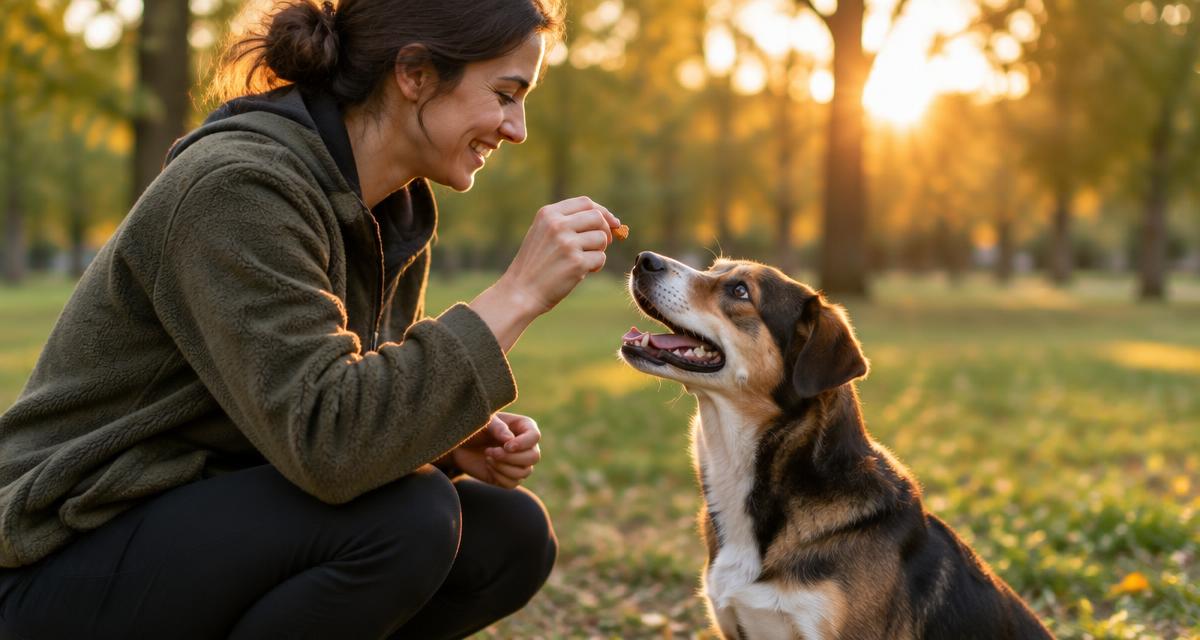
Prolonged eye contact between a dog and their favorite human triggers a release of oxytocin — the same bonding hormone that spikes when a parent looks into their baby's eyes. A 2015 study in Science by Nagasawa and colleagues showed that this oxytocin loop is unique to dogs among domesticated animals; wolves raised by humans do not do it. In other words, the loving stare is a co-evolved superpower, part of what makes dogs our cognitive partners. Dr. Brian Hare calls this shared intentionality — your dog looks at your face because they are trying to think with you.
But not every stare is an oxytocin gaze. Some stares are requests ("the ball is behind the couch"). Some are stress signals. And some are a dog carefully tracking a threat. The trick is reading the whole face, not just the eyes.
Loving stare vs. stress stare: what to look for
A relaxed, affiliative gaze usually pairs with:
- Soft, almond-shaped eyes with normal pupils
- Loose facial muscles, sometimes a slight open mouth or "smile"
- Ears in a neutral or slightly forward position
- A relaxed body posture, weight evenly distributed
A tense or stress stare looks different, even when the eyes seem to be doing the same thing:
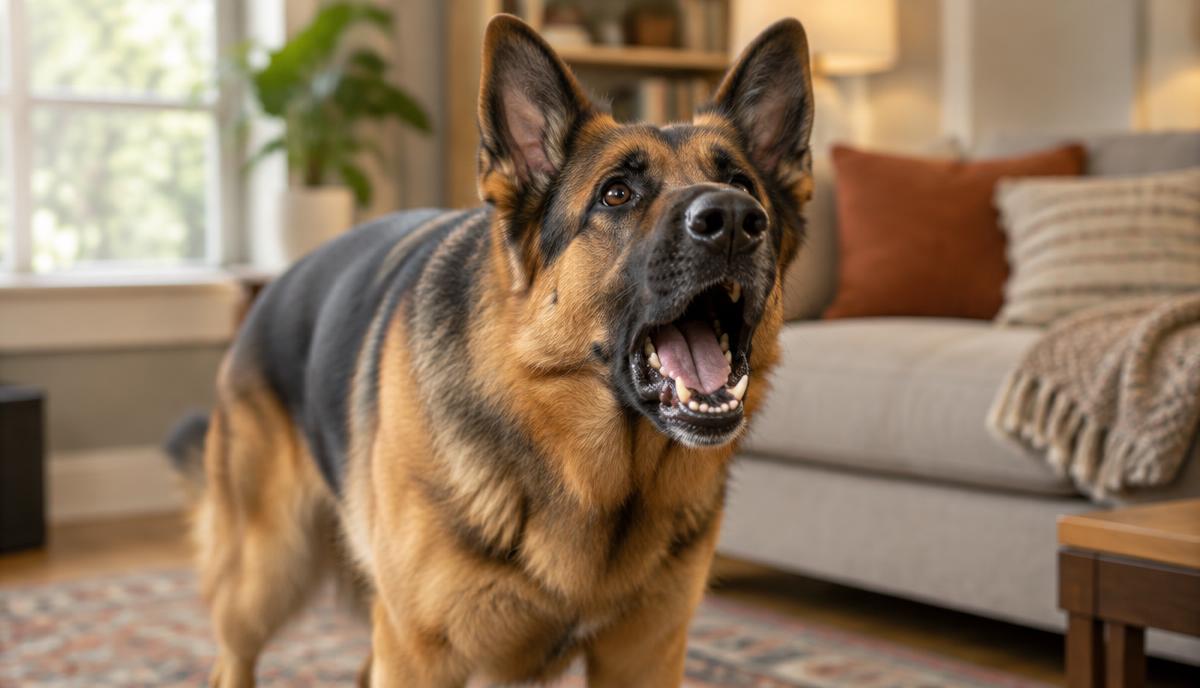
- "Whale eye" — you can see the whites at the edges
- Pupils dilated out of proportion to the light
- Ears pinned back or rotated sideways
- A closed, tight mouth, sometimes with a quick lip lick or hard swallow
- Stiff, still body — the classic freeze that often precedes a growl or bite
These signals are subtle, they flicker on and off in fractions of a second, and most owners miss them until they escalate. That is a big part of why bites so often feel "out of nowhere" to the humans involved — the dog was communicating clearly, just not in a channel humans track well in real time.
The other stares: requests, prediction, and cunning
Not every intense gaze is emotional. Dogs also stare to:
- Request something. Food, a door opening, a toy under the couch — a dog who alternates between staring at you and staring at an object is using referential communication, one of the five cognitive dimensions Dognition measures.
- Predict what happens next. Dogs who track your hand toward the treat drawer are running a small internal model of your future behavior.
- Read the room. Research on social evaluation in dogs shows they watch us watching other people, and adjust their own behavior accordingly. That includes the classic "is my human looking?" glance before stealing food off the counter — a form of social cunning documented in multiple canine studies.
How CanineQ decodes the signals you might miss
The frustrating part of dog body language is that the most important information is in the fastest-moving parts of the face. Ear rotations, lip licks, pupil changes, and micro-blinks can happen in under half a second. Human eyes and human memory are not built to log that stream reliably.
CanineQ was designed for exactly this gap. The AI behavior dashboard analyzes short videos of your dog and flags subtle stress signals — repeated lip licks, whale eye episodes, tension around the mouth, ear pinning — that a human eye tends to skate past. Instead of asking you to remember what your dog looked like this morning, it gives you a frame-by-frame record you can actually compare across days, environments, and situations. Combined with your dog's cognitive profile, the dashboard turns "my dog is acting weird" into a specific, trackable pattern.
Practical rules for the next stare
Next time your dog locks eyes with you, run a three-second checklist: eyes, ears, mouth. Soft eyes, neutral ears, relaxed mouth? Almost certainly a bonding moment — meet the gaze and enjoy it. Whale eye, pinned ears, or a closed tight mouth? Break the stare gently, give your dog space, and figure out what changed in the environment. Alternating stare between you and an object? Follow the point — your dog is telling you something.
Your dog is talking. Reading the whole face, not just the eyes, is how you start listening back.
Ready to see what your dog is really saying? Decode your dog's body language with CanineQ — the AI behavior dashboard turns short videos into a clear read of stress, focus, and connection. Or start with the science and see your dog's cognitive profile.
For the bigger picture, read our overview of dog emotion and cognition.