Holiday Foods Dogs Can and Can't Eat: Ham, Turkey, Sweet Potatoes & More
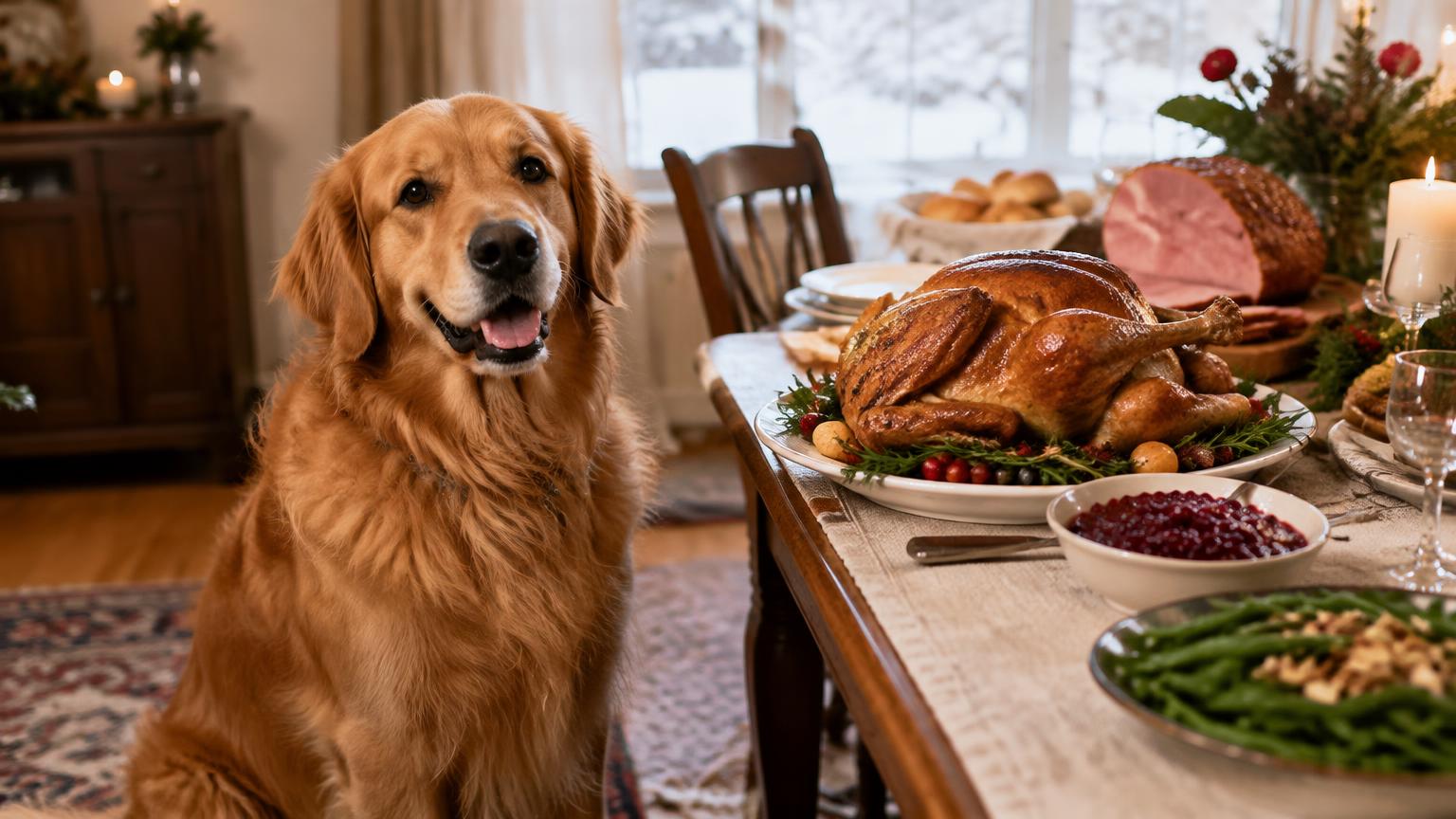
Every Thanksgiving and Christmas, millions of dog owners type the same question into Google while a pair of hopeful eyes watches from under the table: can my dog eat this? We looked at the holiday foods people search for most — from ham and turkey to grapes, sweet potatoes and cinnamon — and answered each one using guidance from the ASPCA Animal Poison Control Center, the U.S. Food and Drug Administration, the American Kennel Club and the Pet Poison Helpline.
The short answer: plain, unseasoned, cooked turkey meat (no skin, no bones) and plain vegetables like green beans, carrots and sweet potato are generally fine in small amounts. Ham, gravy, stuffing and rich sides are best skipped. Grapes, raisins, chocolate, onions, garlic, macadamia nuts, cooked bones and anything sweetened with xylitol should never be shared. Every dog is different — if your dog has a health condition or special diet, ask your veterinarian before sharing anything.
Quick guide: holiday foods for dogs
| Food | Verdict | Why |
|---|---|---|
| Turkey (plain, cooked, boneless, skinless) | OK in small bites | Lean protein; skin, seasoning and fat are the problem |
| Turkey skin, bones & gravy | Skip | Fatty, seasoned; cooked bones can splinter |
| Ham & ham bones | Skip | Very salty and fatty; bones splinter |
| Sweet potatoes (plain) | OK | Fine cooked and plain; skip casseroles with sugar, butter, marshmallows |
| Green beans (plain) | OK | Fine plain; skip green bean casserole with onions |
| Carrots | OK | Raw or cooked, plain, cut to a safe size |
| Corn (off the cob) | OK off the cob | Kernels are fine; cobs are a blockage risk |
| Mashed potatoes | Skip | Usually loaded with butter, cream, garlic or onion |
| Cranberries (plain) | OK in small amounts | Plain berries are fine; sauce is mostly sugar; never mixes with raisins |
| Bread & rolls | Small plain bite OK | Raw dough is dangerous; garlic bread and raisin bread are not |
| Stuffing | Skip | Onions, garlic, fat, sometimes raisins |
| Cinnamon & nutmeg | Skip the desserts | Cinnamon isn't toxic but irritates; nutmeg can be toxic in larger amounts |
| Pumpkin pie / apple pie | Skip | Sugar, fat, spices; plain canned pumpkin is a different food |
| Grapes & raisins | Never | Linked to kidney failure in dogs |
| Chocolate | Never | Theobromine is toxic to dogs |
| Onions & garlic | Never | Damage red blood cells, cooked or raw |
| Pecans, macadamia nuts | Never | Macadamias are toxic; pecans are fatty and can carry mold toxins |
| Candy canes, peppermint, sugar-free treats | Never | May contain xylitol, which is highly toxic to dogs |
Can dogs eat ham?
It's best not to. Ham is one of the most-searched holiday questions, and the answer from the AKC and most veterinary sources is the same: ham is cured with a lot of salt and is high in fat. Rich, fatty table food is a common trigger for stomach upset and pancreatitis in dogs, which is why vets see more of both around the holidays. Ham bones are a firm no — cooked bones can splinter and cause choking or injury to the mouth, throat and gut. If your dog snatches a slice, watch them and call your vet if you have any concerns.
Can dogs eat turkey?
Yes, with conditions. Plain, cooked turkey breast with the skin, bones and seasoning removed is a lean protein many dogs can enjoy as a small treat. What makes holiday turkey risky is everything else: the skin holds fat, butter and seasonings (often garlic and onion), gravy is fat and salt, and cooked turkey bones splinter. The FDA also warns about the string, wrappers and pop-up timers that come off the bird — keep the carcass and trash out of reach.
Can dogs eat sweet potatoes?
Plain cooked sweet potato is generally fine and is even an ingredient in many dog foods. Sweet potato casserole is a different story — butter, brown sugar and marshmallows make it a dessert. Serve a small piece of plain, cooked sweet potato before it hits the casserole dish.
Can dogs eat green beans and carrots?
Yes. Plain green beans and carrots — steamed, boiled or raw and cut to a safe size — are among the most dog-friendly vegetables on the table. Skip green bean casserole: fried onions and creamy soup make it a poor choice. Glazed carrots are usually coated in butter and sugar.
Can dogs eat corn?
Plain corn kernels are fine in small amounts. Corn cobs are not — they're a well-known cause of intestinal blockages because dogs swallow chunks they can't digest. Toss cobs in a secured trash can.
Can dogs eat mashed potatoes?
Plain cooked potato is not toxic, but holiday mashed potatoes usually aren't plain. Butter, cream, cheese and especially garlic or onion make them a skip. If you want to share, set aside a spoonful of plain boiled potato.
Can dogs eat cranberries?
Plain cranberries, fresh or dried without added sugar, are generally fine in small amounts. Cranberry sauce is mostly sugar, and some recipes and trail mixes combine cranberries with raisins — which are dangerous. Read the label.
Can dogs eat bread and rolls?
A small bite of plain baked bread is usually harmless, though it adds nothing your dog needs. Two exceptions matter: raw yeast dough can expand in the stomach and produce alcohol, and the ASPCA lists it as a hazard; and garlic bread, onion rolls and raisin bread bring their own risks.
Can dogs eat stuffing?
Skip it. Stuffing is almost always made with onions, garlic, butter and herbs, sometimes with raisins or nuts — several of the most problematic ingredients in one dish.
Can dogs eat cinnamon, nutmeg and holiday desserts?
Cinnamon isn't considered toxic to dogs, but the ASPCA notes it can irritate the mouth and stomach, and it usually arrives in sugary desserts anyway. Nutmeg contains myristicin, which can cause problems in larger amounts. Pumpkin pie, apple pie, pecan pie and gingerbread combine sugar, fat and spices — keep them on the human side of the table. Plain canned pumpkin (not pie filling) is a separate food that many vets are comfortable with.
Foods your dog should never eat during the holidays
- Grapes and raisins — including fruitcake, stollen and trail mix. Associated with kidney failure in dogs; the ASPCA advises avoiding them entirely.
- Chocolate — dark and baking chocolate are the most dangerous. Watch for advent calendars and stocking stuffers at nose height.
- Onions, garlic, leeks and chives — raw, cooked or powdered, they can damage red blood cells.
- Macadamia nuts and pecans — macadamias are toxic to dogs; pecans and walnuts are fatty and can carry mold toxins.
- Xylitol — found in some sugar-free candy, gum, baked goods and peanut butters. Highly toxic to dogs.
- Alcohol and raw dough — including eggnog with alcohol.
- Cooked bones — turkey, ham, rib roast.
If you think your dog ate something toxic, contact your veterinarian, an emergency vet, or the ASPCA Animal Poison Control Center right away. Don't wait for symptoms.
What can dogs eat on Thanksgiving?
Build your dog a tiny plate before you season anything: a few pieces of plain turkey breast, a spoonful of plain sweet potato or green beans, and a couple of carrot coins. Keep it small — treats should be a small fraction of your dog's daily food — and keep it in their bowl, not from the table, so the begging habit doesn't start.
Why your dog is so good at getting table scraps
That stare isn't an accident. Research by Dr. Brian Hare and Vanessa Woods, described in The Genius of Dogs, shows dogs are unusually skilled at reading human gestures and attention — they track where you look and notice when you're distracted. A busy holiday table, with guests who don't know the house rules, is a perfect setup for a dog's social genius. Ask guests not to share, give your dog a puzzle feeder or chew in another room during dinner, and you'll redirect all that cleverness somewhere safe. Curious how your dog's social skills compare? The Dognition Assessment measures exactly that.
More holiday and winter dog care
- Winter dog safety guide — cold walks, paw protection and antifreeze, another sweet-tasting holiday-season hazard.
- Dog symptoms: when to call the vet — if your dog got into something off the table.
- Free pet sitter checklist — write down the "no table scraps" rule before you travel.
- Dog feeding schedule & food log — keep meals steady through the holidays.
- The 10 best holiday gifts for your dog in 2026 — safer ways to treat them than a plate of leftovers.
This article is general information, not veterinary advice. Your veterinarian knows your dog's health and diet and should guide what's safe for your dog.