Newfoundland Intelligence: Five Dimensions, Not One Score
Newfoundlands were bred to work in cold water alongside fishermen and, famously, to pull people out of it. That job shapes a distinctive way of thinking — but our sample is far too small to put numbers on it, so this page stays qualitative.
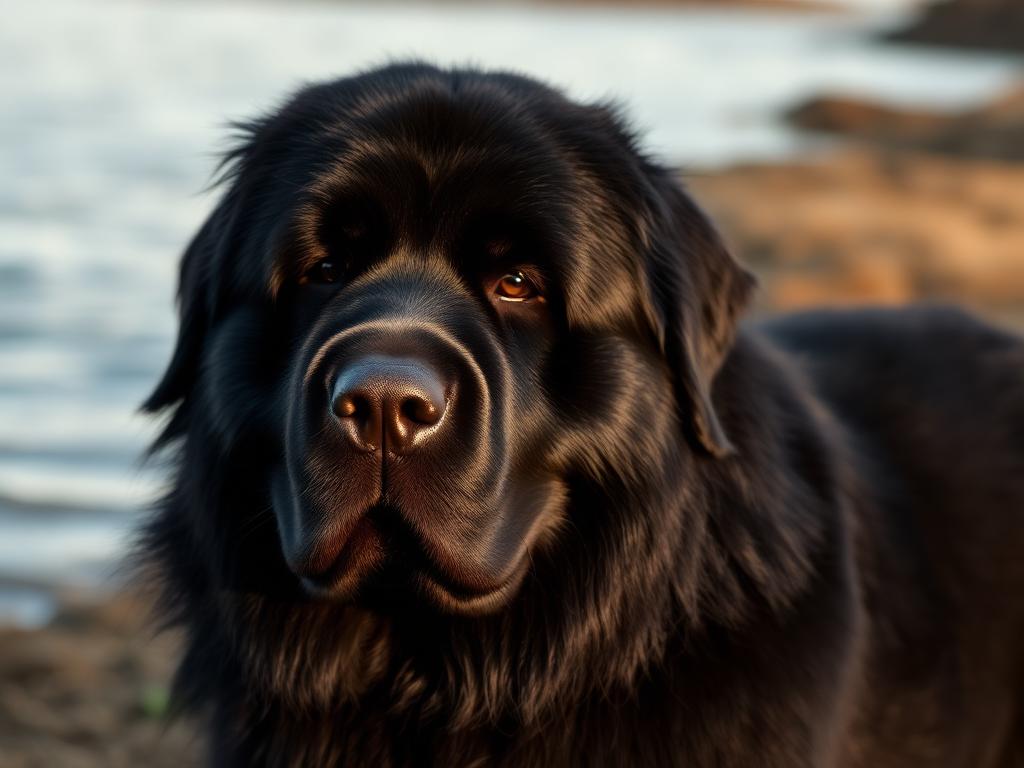
Why there are no Newfoundland scores on this page
Only 50 Newfoundlands have been assessed in our research sample — far below the 150-dog threshold we require before publishing breed figures. Everything below is general breed knowledge, explicitly labelled as such, not our data.
We publish scores only for breeds with at least 150 assessed dogs. You can see every breed that clears that bar in the Canine Cognition Data Center.
What Newfoundlands Were Actually Built to Think About
The breed hauled nets, carried lines between boat and shore, and retrieved anything that went overboard, in conditions where a handler couldn't give continuous direction.
A rescue dog in surf has to judge the situation itself: where the person is, when to commit, when to turn back. That favours steady, deliberate decision-making rather than fast reactivity.
The same selection produced the breed's famous tolerance. A dog that panics in chaos is useless in water — which is why Newfoundlands are so unbothered by household noise and children.
How Newfoundlands Tend to Score Across the Five Dimensions
These are population-level tendencies drawn from Dognition's aggregated assessment data — not predictions about your dog. Individual dogs regularly defy their breed's typical pattern.
Empathy
Often highBreed-typical description, not our data: Newfoundlands are consistently described as sensitive to human distress, which is what the rescue work selected for.
Reasoning
Often moderateBreed-typical description, not our data: working accounts emphasise deliberate assessment over speed.
Communication
Often moderateBreed-typical description, not our data: cooperative with handlers, but bred to act without continuous direction.
Memory
Highly variableNo adequate sample. We won't put a figure on it.
Cunning
Highly variableNo adequate sample. Physical problem-solving reports vary widely between individuals.
Where Newfoundlands Shine
- Exceptionally tolerant of noise, handling and household chaos
- Slow to react, which makes them safe around small children
- Genuinely enjoys cooperative work like carting and water retrieves
- Settles deeply indoors between activity
What Trips Owners Up
- Size means a mistrained adolescent is physically unmanageable — start early
- Heat intolerance limits summer exercise substantially
- Short lifespan and high veterinary costs are real family considerations
- Drool and coat maintenance are constant, not occasional
Training That Matches the Newfoundland Mind
Match the method to the mind. More in our dog training tips hub and the top 20 cognitive games.
Train the size before it arrives
Loose-lead walking and door manners at 20kg, not at 60kg. Everything is easier before the growth spurt.
Water, not running
Swimming gives a heat-intolerant giant breed real exercise without loading developing joints.
Cooperative tasks
Carrying, fetching named items and simple carting suit a breed built to work with people rather than perform for them.
Test the individual
With no breed-level data, the only way to know your Newfoundland's cognitive profile is to assess your own dog.
Newfoundland Intelligence FAQs
Are Newfoundlands intelligent?
We can't say from our data — only 50 Newfoundlands have been assessed, well below our publishing threshold. Their working history selected for steady judgement and sensitivity to people rather than speed.
Are Newfoundlands good with children?
They have a strong reputation for tolerance, which is why they appear on family breed lists. The practical constraints are size, heat sensitivity and cost rather than temperament.
Are Newfoundlands easy to train?
They're generally willing but deliberate — expect a dog that thinks before it responds. Early training matters more than in small breeds simply because of adult size.
Compare Other Breeds
Border Collie Intelligence
Read the profileGerman Shepherd Intelligence
Read the profileGolden Retriever Intelligence
Read the profileLabrador Retriever Intelligence
Read the profilePoodle Intelligence
Read the profileBeagle Intelligence
Read the profileBreed averages can't tell you about your dog
The Dognition assessment scores your Newfoundland across all five cognitive dimensions in about 20 minutes of at-home games.