Poodle Intelligence: Five Dimensions, Not One Score
Poodles are treated as the intellectual of the dog world, usually on the strength of trainability rankings. Our assessment data tells a more specific story: Poodles are above the all-breed average on reasoning and empathy, and unremarkable on the dimensions that trainability lists don't measure.
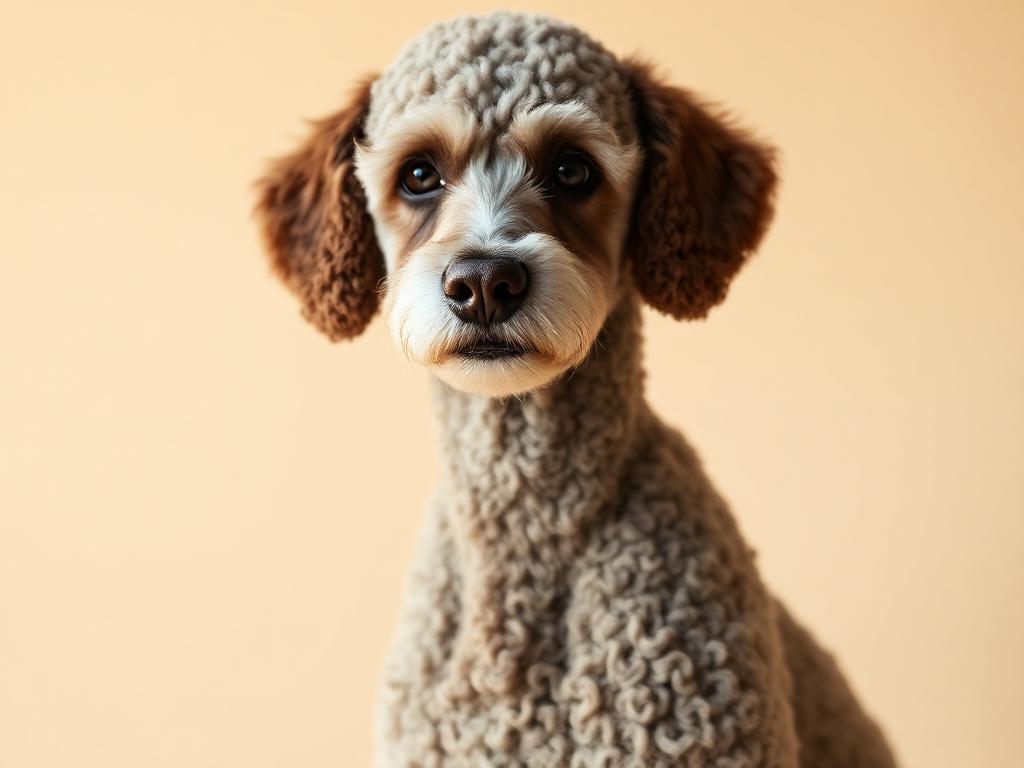
Poodle Cognition by the Numbers
Based on 468 Poodles in our research sample. Each score is the breed average on that assessment game, compared with the average across the 23 breed groups that have at least 150 assessed dogs. Empathy is measured in gaze seconds (0–90); the other four are proportion correct (0–1).
Communication (reading your gestures)
0.657 vs 0.652 all-breed average
Above the all-breed average · ranked 10 of 23 breed groups
Empathy (gaze & bonding)
54.9 vs 51.1 all-breed average
Above the all-breed average · ranked 8 of 23 breed groups
Memory (recall)
0.621 vs 0.600 all-breed average
Above the all-breed average · ranked 9 of 23 breed groups
Reasoning (inference)
0.470 vs 0.461 all-breed average
Above the all-breed average · ranked 6 of 23 breed groups
Cunning (physical problem-solving)
0.610 vs 0.596 all-breed average
Above the all-breed average · ranked 9 of 23 breed groups
What Poodles Were Actually Built to Think About
The Poodle was a water retriever before it was a show dog — a job that required swimming out of sight of the handler, marking where a bird fell, and bringing it back intact. That is a memory task wrapped in a cooperation task.
Because retrieving happens at distance, selection favoured dogs who kept checking back in with a person rather than freelancing. That is the root of the Poodle's reputation for trainability: not raw processing power, but a strong default to look to a human when a problem gets hard.
The size varieties were bred down later, mostly for companionship. Our sample pools Standard, Miniature and Toy Poodles together, so read the figures on this page as "Poodles" rather than as a Standard Poodle profile.
How Poodles Tend to Score Across the Five Dimensions
These are population-level tendencies drawn from Dognition's aggregated assessment data — not predictions about your dog. Individual dogs regularly defy their breed's typical pattern.
Reasoning
Often highAbove the all-breed average — Poodles tend to work out where a treat went from indirect evidence rather than searching at random.
Empathy
Often highLong eye contact during the gaze game. Poodles are unusually willing to hold a person's attention while working out what to do next.
Memory
Often moderateSlightly above average recall of where things were hidden — consistent with a retrieving history, without being a standout.
Communication
Often moderateReads pointing and gestures at close to the all-breed average, which is a useful corrective to the "second smartest breed" headline.
Cunning
Often moderateMiddle of the pack on physical problem-solving and rule-bending. Individual Poodles vary a lot here, especially by how much freedom they've had.
Where Poodles Shine
- Learns cue chains quickly and keeps checking in with the handler mid-task
- Transfers a trained behaviour to new rooms and surfaces with little re-teaching
- Sustains eye contact, which makes attention-based training easy to build
- Handles complex puzzle toys without frustrating out
What Trips Owners Up
- Boredom shows up as barking and invented games, not as a quiet dog
- Highly sensitive to handler tension — a frustrated trainer stalls progress fast
- Grooming handling has to be trained deliberately, or it becomes a lifelong fight
- Smart enough to learn the loopholes in a rule you taught sloppily
Training That Matches the Poodle Mind
Match the method to the mind. More in our dog training tips hub and the top 20 cognitive games.
Give the reasoning real problems
Hide-and-seek with a person, two-cup inference games, and scent puzzles beat repetitive obedience drills for a dog that scores above average on inference.
Use the eye contact
Poodles offer sustained gaze naturally. Reward it as a default behaviour and you get a reliable attention cue for free in busy environments.
Train grooming like a skill
Short, paid handling sessions — ears, paws, muzzle — long before the coat needs work. Cooperative care is a training project, not a chore.
Rotate the job
Swap puzzle types weekly. A solved puzzle stops being a cognitive task and becomes a habit.
Poodle Intelligence FAQs
Are Poodles the second smartest dog breed?
That ranking comes from trainability surveys, not from cognitive testing. In our assessment data Poodles are above the all-breed average on reasoning and empathy, and close to average on communication and physical problem-solving — strong, but not a clean second place across all five dimensions.
Is this data for Standard Poodles specifically?
No. Our robust sample of 468 dogs pools all Poodle sizes. Standard Poodles alone are a much smaller group, so we don't publish size-specific figures.
Are Poodles good family dogs?
Frequently, yes — the combination of low shedding, sustained attention and above-average reasoning suits households that want a dog involved in daily activity. See our guide to the best dog breeds for families for the full comparison.
Compare Other Breeds
Border Collie Intelligence
Read the profileGerman Shepherd Intelligence
Read the profileGolden Retriever Intelligence
Read the profileLabrador Retriever Intelligence
Read the profileBeagle Intelligence
Read the profileBoxer Intelligence
Read the profileBreed averages can't tell you about your dog
The Dognition assessment scores your Poodle across all five cognitive dimensions in about 20 minutes of at-home games.