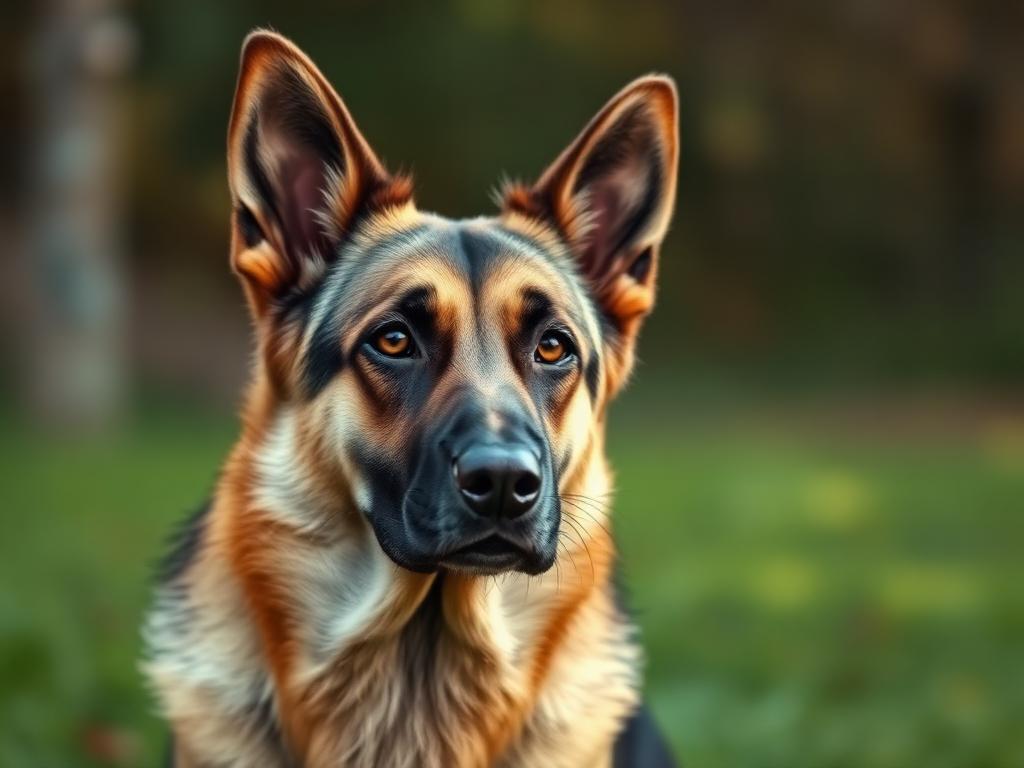
German Shepherd Training Tips: Matched to How They Think

German Shepherds combine high trainability with genuine environmental sensitivity. Most of what gets labelled stubbornness is actually a dog processing more information than the exercise accounts for.

Printable German Shepherd training checklistBuild a four-week German Shepherd training planGerman Shepherd focused on a handler during training

The cognitive training approach

Give the dog a job and a clear structure. Shepherds work well within explicit rules, and clarity lowers the arousal that drives their most common problem behaviours.

  • Memory

    Routines consolidate quickly — build the routine you actually want from week one.

  • Communication

    Highly responsive to handler cues, including unintentional tension travelling down the lead.

  • Cunning

    Often tests boundaries in adolescence. Rules must be identical across every person in the household.

See the full German Shepherd cognitive profile

Which approach fits your German Shepherd?

Three quick questions and you'll get the training method, reward strategy and session shape that fit this breed and the behaviour you're working on.

Find your approach
1 / 3

Which behaviour are you working on?

German Shepherd potty training

Shepherds are typically fast to house-train because they generalise routine well — inconsistency, not capability, is the usual failure point.

  1. Fix the schedule first: same wake, feed, and outing times every day for two weeks.
  2. Use crate or confinement rest periods between outings so the dog never has the chance to rehearse an indoor accident.
  3. Reward outdoors immediately and then continue the walk, so going doesn't end the outing.
  4. Track regressions against schedule changes before assuming a training problem.

Most common mistake: Different household members running different schedules — this breed's routine memory works against you when the routine isn't one routine.

German Shepherd leash training & pulling

Shepherd pulling is often forward drive plus environmental scanning. The lead becomes a channel for your tension as much as theirs.

  1. Train a heel position as a paid job with a clear start and release cue, rather than as a constant expectation.
  2. Keep your leash hand relaxed and low; tension transmits directly to a communication-sensitive dog.
  3. Practise pattern games — rhythmic step-and-treat sequences — to give the walk predictable structure.
  4. Choose quieter routes during the reactive adolescent window instead of flooding the dog with triggers.

Most common mistake: Correcting the pull without ever paying the correct position, which teaches what not to do but never what to do.

German Shepherd barking & reactivity

Alert barking is functionally selected for in this breed. The goal is a defined start and stop, not silence.

  1. Acknowledge the alert with a consistent phrase, then cue a settle and pay it — the dog needs an exit from the behaviour.
  2. Manage triggers: block window access to the street and use white noise for sound-triggered barking.
  3. For reactivity, work at whatever distance the dog can still take food, and shrink it over weeks not days.
  4. Add daily scent work; nosework lowers baseline arousal more reliably than extra running for most Shepherds.

Most common mistake: Punishing the alert itself. Suppressing the warning in a breed selected to warn often produces a dog that escalates without notice.

German Shepherd recall & off-leash reliability

Recall is usually strong at home and fragile around high-arousal triggers. Proofing is the entire task.

  1. Establish the cue indoors, then in the yard, then on a long line before ever going off-lead.
  2. Pay with a tug or chase game — most Shepherds value the interaction over food in high arousal.
  3. Practise emergency recalls with a separate, heavily-paid cue reserved for genuine situations.
  4. Re-proof deliberately during adolescence; expect a reliability dip between ten and eighteen months.

Most common mistake: Going off-lead too early because the yard recall looks perfect. Yard recall is a different behaviour from field recall.

German Shepherd chewing, destruction & alone time

Under-worked Shepherds redirect drive into destruction, and their bond strength makes isolation genuinely aversive.

  1. Schedule a work session — obedience, tracking, or a puzzle — before any long absence.
  2. Use a consistent confinement area the dog has positive associations with, built up gradually.
  3. Leave a high-value chew that only ever appears at departure time.
  4. Build duration in minutes and record the dog once to see whether you're dealing with boredom or distress.

Most common mistake: Treating separation distress as a discipline issue. Distress needs a graduated desensitisation plan, not a correction.

Stop guessing which method fits your dog

Breed gives you a starting point. Dognition's assessment games show where your individual German Shepherd actually sits across the five cognitive dimensions — so you can pick the method that matches the dog, not the label.

Take the dog IQ test

German Shepherd training questions

Why is my German Shepherd suddenly disobedient at one year old?
Adolescence reliably produces a reliability dip as the dog tests boundaries and the environment becomes more salient. Reduce difficulty, re-pay known cues, and expect the plateau to resolve with consistency rather than escalation.
How do I stop German Shepherd reactivity on walks?
Work under threshold — the distance at which your dog still takes food — and pair the trigger with reward before the dog reacts. Progress is measured in reduced distance over weeks, and quieter routes in the meantime are progress, not avoidance.
How much training does a German Shepherd need daily?
Two or three short structured sessions plus a scent or problem-solving activity generally works better than one long session, because it satisfies the working drive without building arousal.

Training tips for other breeds

122,021 dogs assessed