How Video and AI Can Help Spot Dementia and Aging Trends in Your Dog
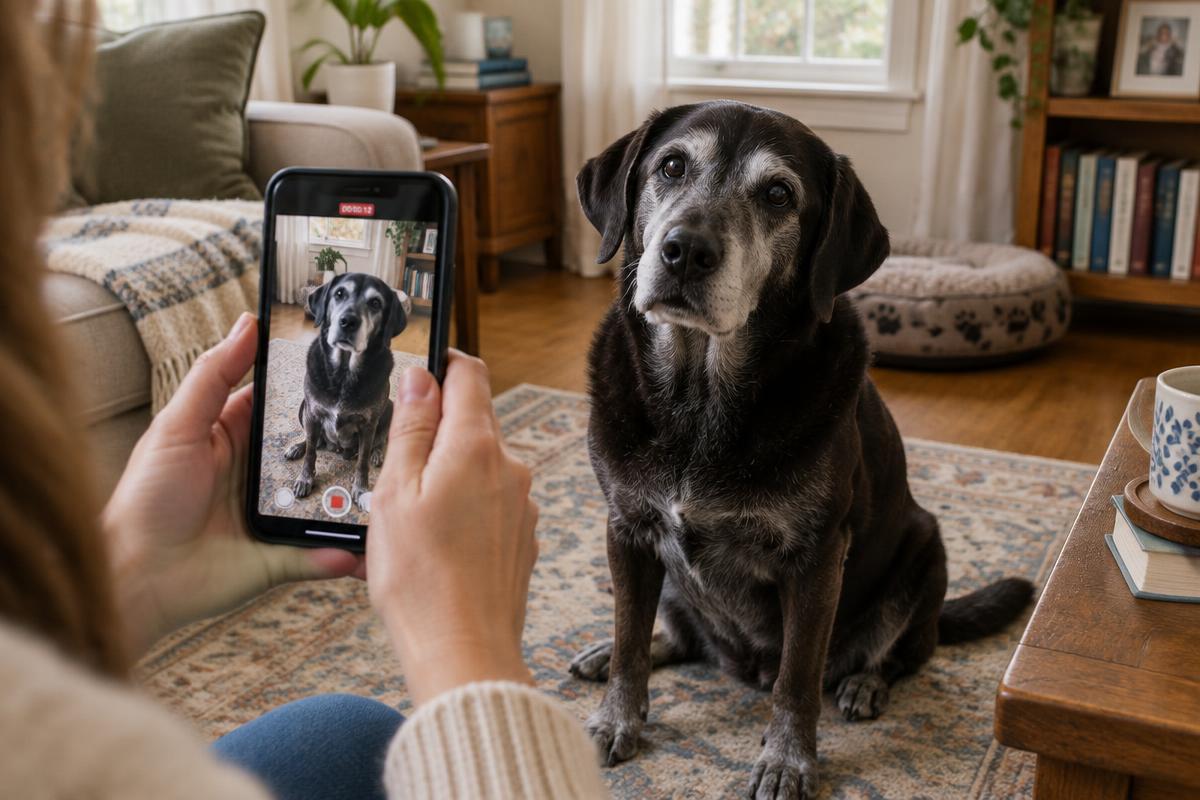
Ask any owner of a senior dog when they first noticed something changing, and you get the same answer: "Looking back, it had been going on for a while." Looking back is the problem. Memory compresses months into a blur, and the slowest, most important changes — a dog who sleeps a little later, greets a little slower, gets lost in a hallway they have walked ten thousand times — are exactly the ones daily life edits out.
Video does not edit. And AI does not forget. That combination is quietly becoming one of the most useful tools we have for understanding how our dogs age.
Why the earliest signs are so easy to miss
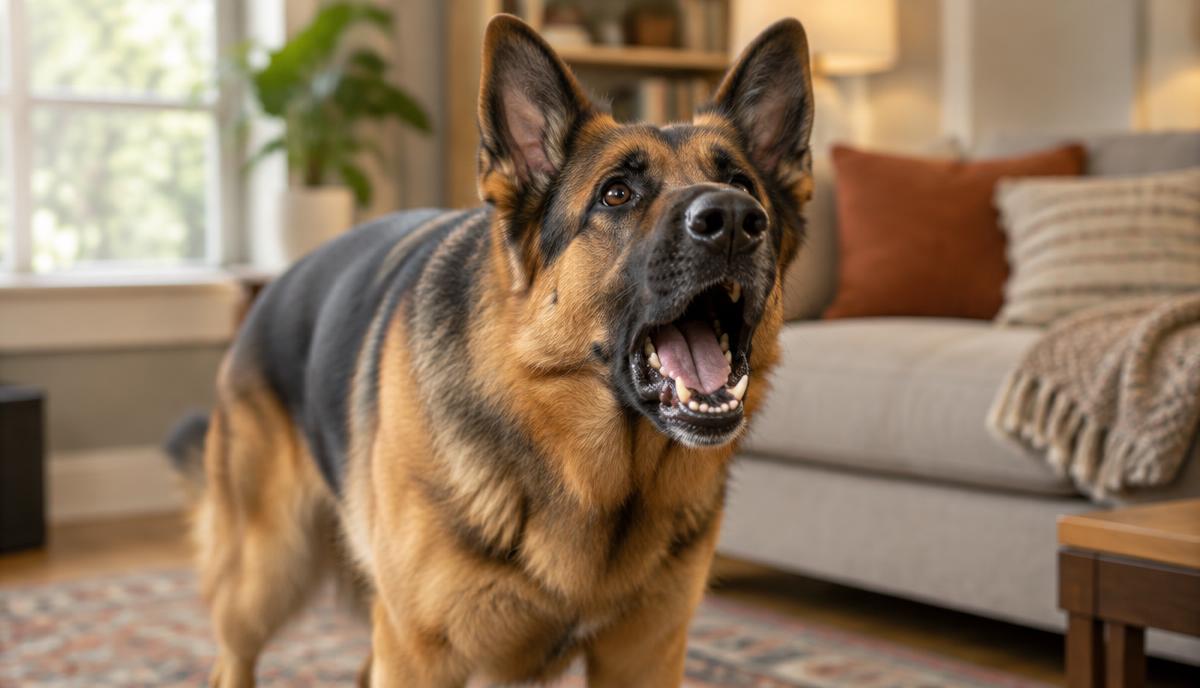
Canine cognitive dysfunction — the condition behind what most people call dog dementia — rarely announces itself. It arrives as a pattern of small things: disorientation in a familiar room, a house-trained dog having accidents, nights and days trading places, a social dog drifting away from the family. Veterinarians group these into the DISHAA categories, and each one on its own is easy to explain away as a bad day or normal aging. Our guide to the signs of dog dementia walks through each category beside what normal aging actually looks like, because the two are genuinely easy to confuse.
The confusion is not a failure of love or attention. It is a failure of resolution. Human memory is built to notice events, not trends — and cognitive aging is almost entirely trend.
What a camera sees that we can't
A thirty-second clip of your dog crossing the kitchen contains more behavioral signal than most of us could write down after watching it: gait symmetry, pace, head carriage, how long they hesitate at the doorway, whether they glance back at you. Modern computer vision tracks those signals frame by frame — ear position, tail carriage, gaze direction, response latency — and, crucially, it compares today's clip to last month's clip of the same dog.
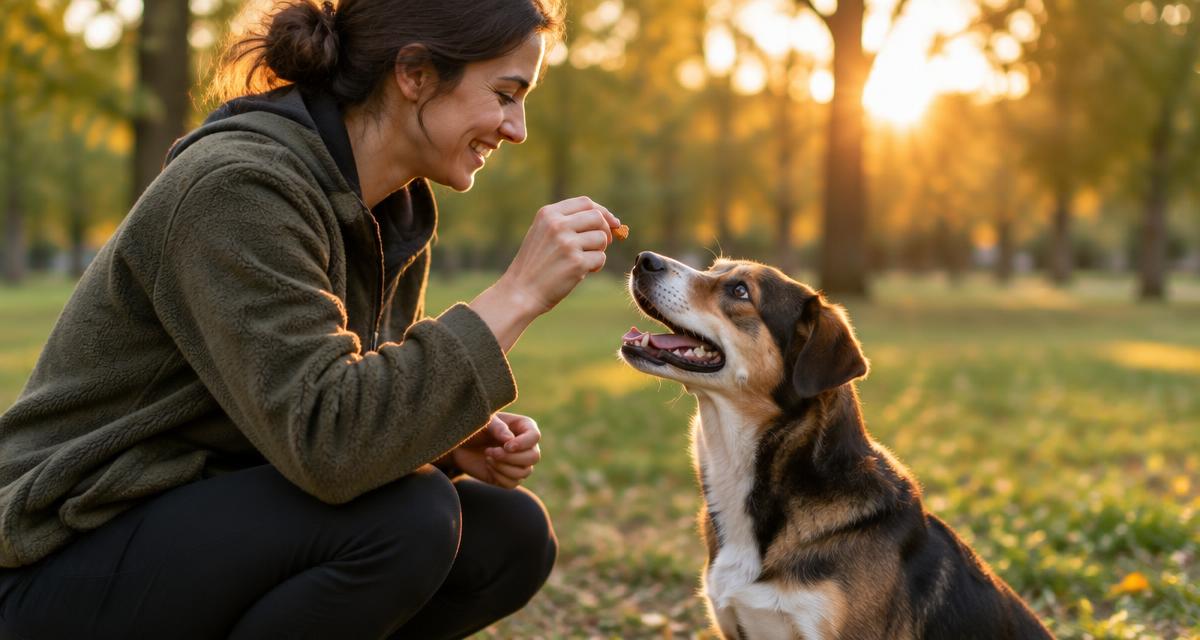
That comparison is the whole game. A single video of any dog tells you very little. A video of your dog, measured against your dog's own baseline, tells you whether something is drifting — and in which direction. This is the same logic behind the work of Dr. Brian Hare and Vanessa Woods at the Duke Canine Cognition Center, the research foundation Dognition was built on: cognition is not one thing, and change only means something when you know where the dog started.
The trends that matter most
Our dataset of more than 25,000 assessed dogs shows what healthy cognitive aging actually looks like, and it is more reassuring than most owners expect. Empathy — the tendency to hold eye contact and read your gestures — keeps climbing into the senior years, peaking around age nine. Communication barely moves at any age. Reasoning softens gradually after about age eight, and memory holds remarkably steady until around twelve, when it can drop more sharply. We charted all four curves on the canine cognitive aging page.
Those curves are why a baseline matters so much. If your dog's memory score eases down at nine, that is the normal shape of aging. If the same dog's memory and orientation both slide quickly at nine, that is off the curve — and exactly the kind of pattern worth describing to your vet with timestamps rather than adjectives.
Dognition research · 25,463 dogs
How cognition commonly changes with age
Compare your dog’s observations with the broad age pattern below—not with a single score. Repeated changes in the same dog matter more than one moment or a comparison with another dog.
Sample per bin ranges from n=444 (age 12) to n=3,539 (age 3); a research sample of 25,463 dogs.
Often steady or risingEmpathy rises into later life, while communication remains relatively stable across the age groups.
Often changes laterReasoning softens after midlife, while memory changes more noticeably after age twelve in this sample.
Source: aggregated Dognition assessment data from 25,463dogs, grouped by owner-reported age. These are population averages, not a diagnosis or prediction for an individual dog. Discuss meaningful or sudden changes with your veterinarian.
From "he seems off" to something a vet can use
The hardest part of a senior-dog vet visit is the first five minutes, when the vet asks what changed and when. Video plus AI turns that conversation from reconstruction into evidence: here is his evening pacing in March versus September; here is his response time to his name across six months; here is the night pattern, logged. For dogs with sundowning — the evening restlessness that exhausts so many households — a recorded night-time record is often the single most useful thing an owner can bring in. Our sundowning guide covers what to capture.
If you want a structured way to start noticing, the interactive cognitive aging assessment places your dog on the aging curve from eight observation questions and recommends the tracking activities that fit what you are seeing. It takes about two minutes, and nothing you enter is stored.
What AI can't do
Video analysis does not diagnose. It cannot tell cognitive dysfunction from arthritis pain, hearing loss, or a thyroid problem — several conditions mimic dementia in older dogs, which is why any real change belongs in front of your veterinarian. What AI can do is make sure that when you get there, you arrive with a record instead of a hunch.
The CanineQ app is built around exactly this idea: ordinary videos, uploaded over time, read against your dog's cognitive profile, so the slow drift of aging becomes visible while there is still time to act on it. An aging dog is not a diminished dog — but it is a changing one, and the owners who can see the change earliest are the ones who help most.
See how canine cognition changes with age →