Filming Dog Tricks That Actually Look Impressive
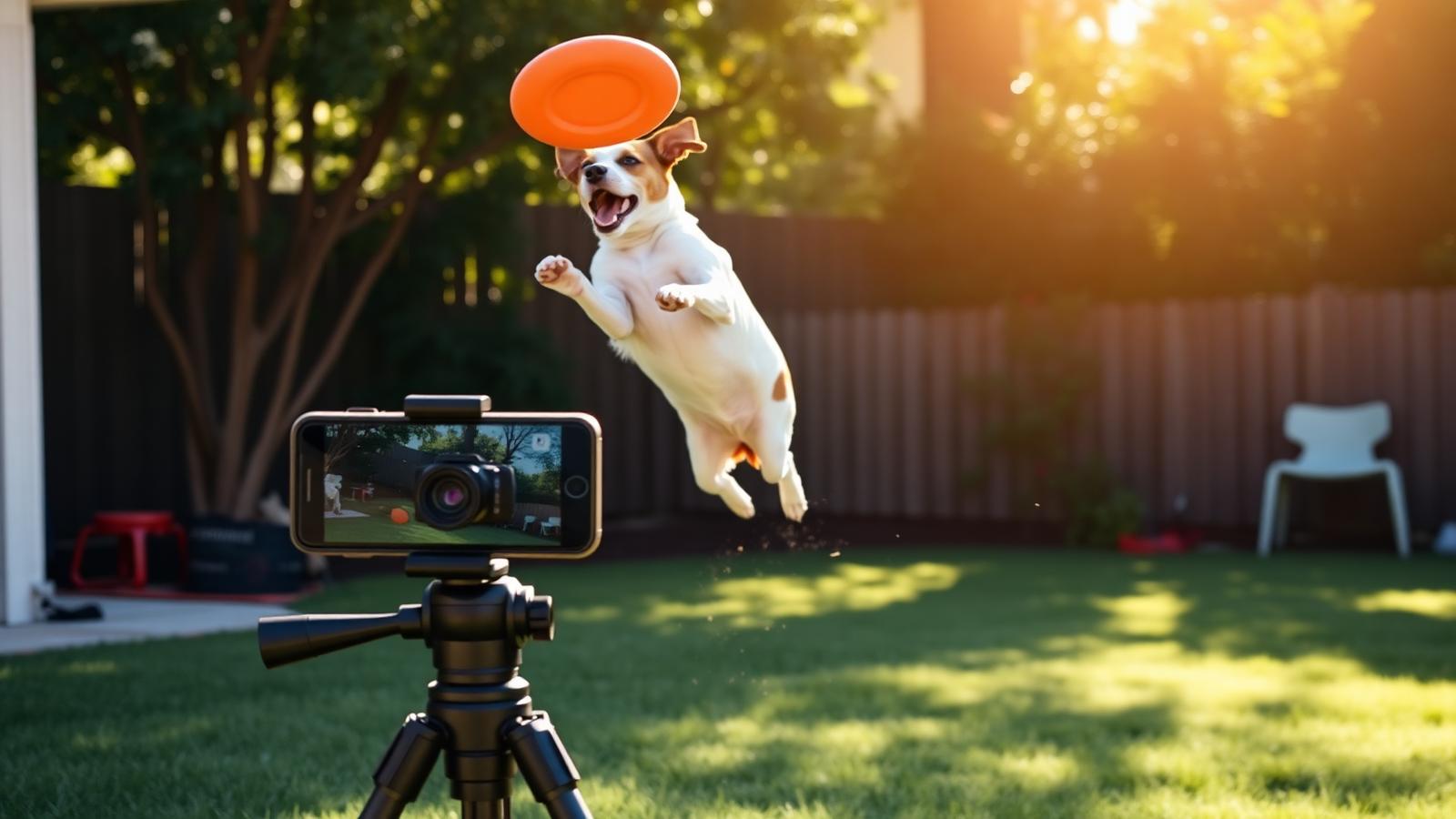
A trick that delights people in your kitchen often looks flat on video. Usually nothing is wrong with the trick. The problem is framing, cutting, and the fact that the clip was filmed on the tenth attempt, when the dog had stopped enjoying it.
Quick answer
Film at your dog's eye level, keep the whole trick in one unbroken shot, start recording before you cue, and stop the session while your dog is still keen. Clips that show a real first or second attempt consistently outperform polished tenth takes.
Five rules that fix most clips
- One take, one shot. Cuts make audiences suspect the trick was assembled. An unbroken shot is proof.
- Eye level, slightly wide. Leave room for the movement to happen inside the frame.
- Roll early. The best two seconds are usually the anticipation before the cue.
- Show the setup. A quick shot of the problem makes the solution readable.
- Keep it under five minutes. Enthusiasm is visible; so is its absence.
Games that film especially well
- Cup game / memory versus smell. Instantly readable, and genuinely revealing about how your dog solves problems.
- Yawn game. A quiet, surprisingly moving clip about empathy.
- Eye contact and self-control tasks. Tension builds naturally, which holds attention.
- Puzzle escalation. Same puzzle, harder each week — a format, not a one-off.
- Name that toy. Slow to build, excellent as a series.
Our top 20 games to play with your dog covers the science behind each one, which also gives you something interesting to say in the caption.
Troubleshooting
- Dog keeps breaking position. Shorten the duration and reward earlier; do not raise your voice.
- Dog stares at the treat, not the camera. Hold the reward behind the phone at lens height.
- Clip feels slow. Cut the first second, not the middle. The payoff needs the build-up.
- Dog disengages after two reps. That is the session ending, not a training failure. Film tomorrow.
Pick tricks your dog is built for
Dogs with strong memory learn trick chains fast. Reasoning-heavy dogs shine in physical puzzles. Socially attentive dogs are magnetic in cue-and-response formats. If a trick keeps failing on camera, the mismatch is usually between the format and the mind. Our profile-to-content-style guide explains how to choose.