Can Dogs Recognize Your Voice Among Hundreds of People?

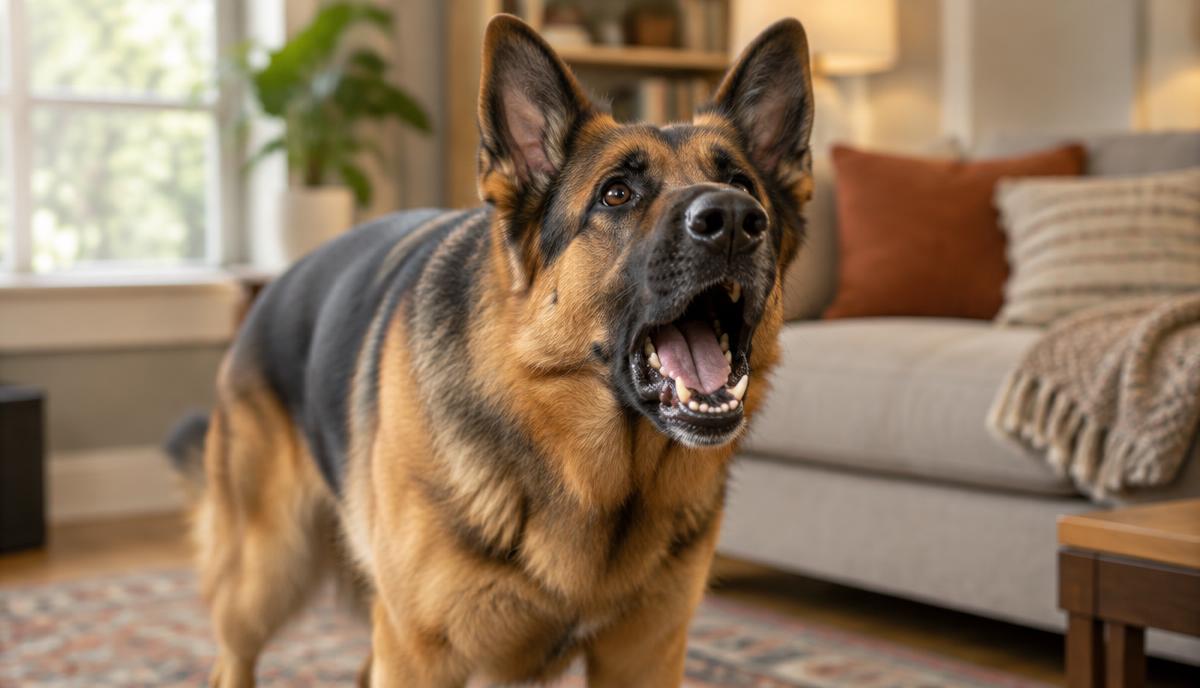
Stand in a room full of people talking and call your dog's name. Odds are, your dog's head will snap toward you before anyone else has even registered the sound. It feels like magic. It is actually one of the most well-studied — and most underappreciated — feats of canine cognition.
Your dog knows it's you before you say their name
In a landmark fMRI study at Eötvös Loránd University in Budapest, Attila Andics and colleagues trained awake, unrestrained dogs to lie still inside a scanner while they listened to human and dog vocalizations. The dogs' auditory cortex lit up in patterns strikingly similar to ours. More importantly, the dogs discriminated between familiar and unfamiliar voices, and between emotional tones, with a specificity that had previously only been documented in humans and primates. Your dog is not just hearing sound — they are running voice recognition on it, the same way you recognize your mother on the phone in the first syllable.
The canine ear is built for voices
Dogs hear roughly twice the frequency range humans do (up to about 45,000 Hz) and can locate a sound source with remarkable precision using 18 muscles per ear to swivel toward it. That physical hardware matters, but the more interesting story is what their brain does with the signal. Dogs are especially tuned to the pitch, rhythm, and cadence patterns of a familiar human — the prosodic fingerprint that makes your voice yours. Change the words, whisper them, sing them, or say them through a car speaker, and your dog still knows.
They read emotional tone, not just words
The same Budapest lab showed that a specific region of the dog's brain responds differently to happy vocalizations versus neutral or negative ones, mirroring the left-hemisphere bias humans show for emotional speech. In plain English: your dog does not just hear "good boy." They hear that you meant it. That is why a flat, distracted "good boy" while you're scrolling gets a very different response than the real thing. Dogs are eavesdropping on your emotional state, constantly, through your voice.
Voice is one signal in a multisensory profile
Voice recognition rarely happens in isolation. Dogs cross-check what they hear against scent, silhouette, gait, and posture — a process cognitive scientists call multisensory integration. A 2016 study in Animal Cognition showed that dogs get visibly surprised when a familiar voice is paired with the face of a stranger, and vice versa. Your dog is building a mental model of you that includes your voice as one channel among several. This is the same integrated social cognition we explore in The Genius of Dogs, and one of the reasons dogs read us so much more accurately than we usually give them credit for.
Familiar voices calm anxious dogs
The practical version of all this science shows up at the vet's office. Multiple studies on canine stress have found that hearing a familiar owner's voice — even a recording — lowers heart rate and reduces cortisol markers in anxious dogs. This is why a phone call left playing during a long crate stay can help, and why the wrong voice at the wrong moment (a stranger, a tense argument in the next room) can spike a dog's arousal even when everything looks calm on the surface. Your voice is a regulatory tool, not just a greeting.
Puppies start learning your voice early
The window opens fast. Puppies begin discriminating human voices within the first few weeks of the socialization period, long before they respond reliably to any specific word. That is one of the reasons we spend so much time on early voice exposure in the work behind Puppy Kindergarten at Home — the sooner a puppy hears the voices that will matter across their life, in a calm and positive context, the more deeply those voices get encoded.
Background noise rarely fools them
Researchers call it the cocktail party effect — the ability to isolate one voice from a wall of competing sound. Humans do it. Dogs do it too, and often better than we do. In noisy environments, dogs use the pitch contour and rhythmic signature of a familiar voice to lock on and tune everything else out. If your dog picks your call out of a crowded park, they're not lucky. They're doing exactly what their auditory system evolved to do, in partnership with a brain that has spent every waking hour of your relationship building a detailed model of what you sound like.
What this means for your bond
Voice recognition sits alongside the gaze, the tail, and the sniff as one of the primary channels your dog uses to know you. It is one of the most concrete pieces of evidence that dogs are not passive companions — they are actively working, every day, to understand the specific human in front of them. That's the premise Dognition has been built on for over a decade, and the reason we now measure five dimensions of canine cognition instead of one.
Curious what else your dog is picking up that you're missing? Start your dog's Dognition Assessment and see the cognitive profile behind the ears that always know it's you.
For the bigger picture, read our overview of dog emotion and cognition.