Top 5 Dog-Friendly States
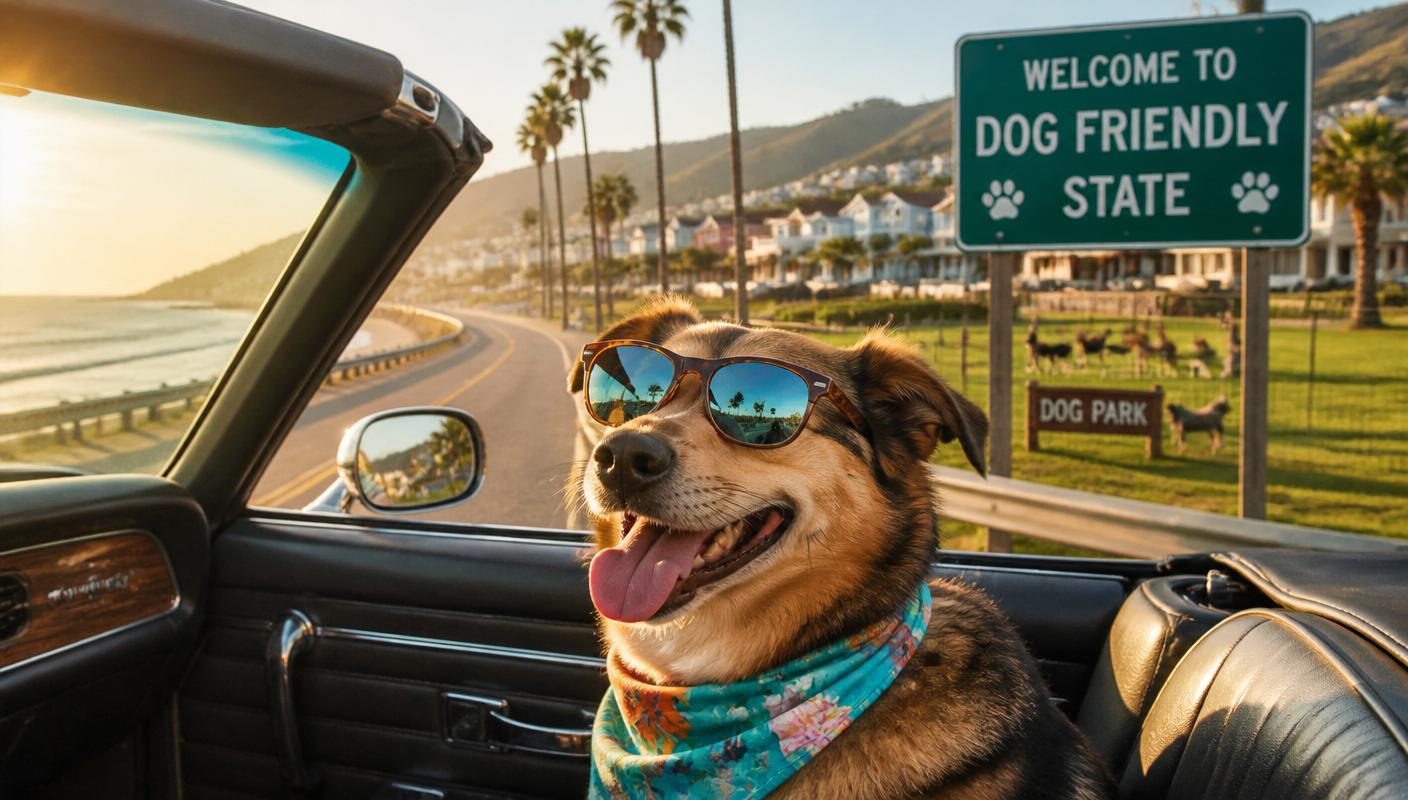
What makes a state truly dog-friendly? It is not just patio allowances and boutique biscuit bakeries. It is whether your dog can see a vet quickly, walk safely, burn energy legally off-leash, and even accompany you to work without paperwork gymnastics. We combined government data, industry reports, and a few delightfully odd metrics to rank the five best states for dogs in 2026.
How we ranked the states
Each state was scored across six categories weighted by what actually affects daily life:
- Dog park supply — total off-leash acres per 1,000 registered dogs.
- Safe-walk infrastructure — pedestrian fatalities per capita, traffic calming, and sidewalk completeness.
- Veterinary access — licensed veterinarians per 10,000 dogs.
- Dog-walker availability — active pet-care professionals per 1,000 dog-owning households.
- Pet-friendly state laws — anti-tethering rules, landlord pet-deposit caps, and statewide non-discrimination language for assistance animals.
- Pet-friendly workplaces — percentage of employers with formal pet-at-work policies, using 2025 Bureau of Labor Statistics supplement data and corporate HR surveys.
1. Colorado
Colorado tops the list because it treats outdoor access as a birthright for both species. The state has more than 240 off-leash dog parks and, by one estimate, roughly 2.3 off-leash acres per 1,000 registered dogs — one of the highest ratios in the country. Denver alone added seven new fenced parks between 2023 and 2025. Boulder and Fort Collins also rank in the top ten U.S. cities for safe pedestrian infrastructure, which matters more than people realize: dogs walked on low-traffic streets with complete sidewalks have measurably lower cortisol levels than dogs walked on busy, fragmented routes. Colorado's veterinary workforce is dense, with approximately 28 veterinarians per 10,000 dogs, and the state has a large concentration of mobile vet clinics serving mountain towns. On the legal front, Colorado limits non-refundable pet deposits to a single month's rent in many jurisdictions and explicitly allows emotional-support animals in common areas of multi-family housing. Perhaps most unusually, Colorado also has one of the nation's highest percentages of pet-friendly employers: an estimated 31% of office-based companies allow dogs at work at least part of the week.
2. Oregon
Oregon is the only state where dogs outnumber children in some counties, and the infrastructure reflects it. Portland has more than 30 off-leash areas within city limits, including the legendary 5-acre Thousand Acres dog park. Statewide, Oregon scores exceptionally high for safe walks: Portland's metro area has one of the lowest pedestrian fatality rates among major U.S. cities, and the state requires new subdivisions to include pedestrian connectivity. Veterinary access is strong, with roughly 25 veterinarians per 10,000 dogs, and Oregon has a surprisingly deep bench of certified dog walkers — an estimated 1.8 dog walkers per 1,000 dog-owning households in the Portland metro area alone. Oregon's statewide anti-tethering law is unusually specific: dogs cannot be tethered for more than 10 hours in a 24-hour period, and the limit drops in extreme weather. The state also leads in workplace friendliness; an estimated 27% of Oregon employers have formal pet-at-work policies, partly driven by the tech and outdoor-apparel sectors.
3. Washington
Washington combines dog-friendly cities with dog-friendly wilderness. Seattle is frequently ranked as one of the most dog-friendly cities in the world, with more than 150,000 registered dogs and 14 off-leash parks inside city limits. The state has a high ratio of veterinarians to dogs — roughly 26 per 10,000 — and King County operates one of the nation's only publicly funded veterinary emergency loan programs for low-income pet owners. Dog-walking businesses are abundant; Seattle has one of the highest per-capita counts of Rover and Wag caregivers in the country. Washington's pedestrian safety record is solid, and many Seattle neighborhoods have traffic-calmed "greenways" originally designed for children but now heavily used by dog walkers. On the legal side, Washington has strong protections against breed-specific legislation and requires landlords to provide reasonable accommodations for assistance animals. Around 24% of Washington employers allow dogs in the workplace, with the Eastside tech corridor leading the way.
4. Minnesota
Minnesota is the unexpected champion of the Midwest. The Twin Cities metro area has more than 60 off-leash dog parks, including the massive 29-acre Off-Leash Dog Area at Elm Creek Park Reserve. The state's safe-walk score is excellent: Minneapolis and St. Paul have extensive parkway systems and low pedestrian fatality rates. Minnesota also has one of the highest veterinary-to-dog ratios in the Midwest, at roughly 29 veterinarians per 10,000 dogs, and the University of Minnesota Veterinary Medical Center is one of the largest teaching hospitals in the country. The dog-walker economy is robust, with particularly high coverage in the suburbs. Minnesota's legal environment is quietly progressive: the state has strict anti-cruelty statutes, limits on outdoor tethering, and a growing number of municipalities that cap pet deposits. What makes Minnesota unusual is its workplace culture: despite harsh winters, an estimated 22% of employers allow dogs, with many small manufacturers and creative agencies treating pets as morale tools.
5. California
California is impossible to ignore because of scale. The state has more than 1,000 dog parks — by far the most in the nation — and several cities, including San Francisco and San Diego, have designated dog-friendly beaches. The veterinary density is high overall, though it varies dramatically by county; urban areas average around 30 veterinarians per 10,000 dogs, while rural counties lag. California has the largest dog-walking workforce in absolute numbers, and app-based pet-care coverage is nearly universal in major metros. The state's safe-walk score is mixed: coastal cities are excellent, but inland car-dependent suburbs drag the average down. California's legal framework is among the most pet-friendly in the country, with strict anti-tethering laws, housing protections for assistance animals, and a 2024 law that requires landlords to allow common household pets in many subsidized housing developments. Around 26% of California employers have pet-at-work policies, with the Bay Area and Los Angeles entertainment industry setting the tone.
What the data really means
These rankings are not about which state loves dogs most. They are about where the daily mechanics of dog ownership are easiest. A dog-friendly state is one where you can find a vet on short notice, walk without white-knuckling at intersections, let your dog run legally off-leash, and bring them along to a workplace that treats pets as family. The best place for your dog is the one that matches your dog's energy, your budget, and your lifestyle — but if you are looking for a state that has already built the infrastructure, these five are a safe bet.