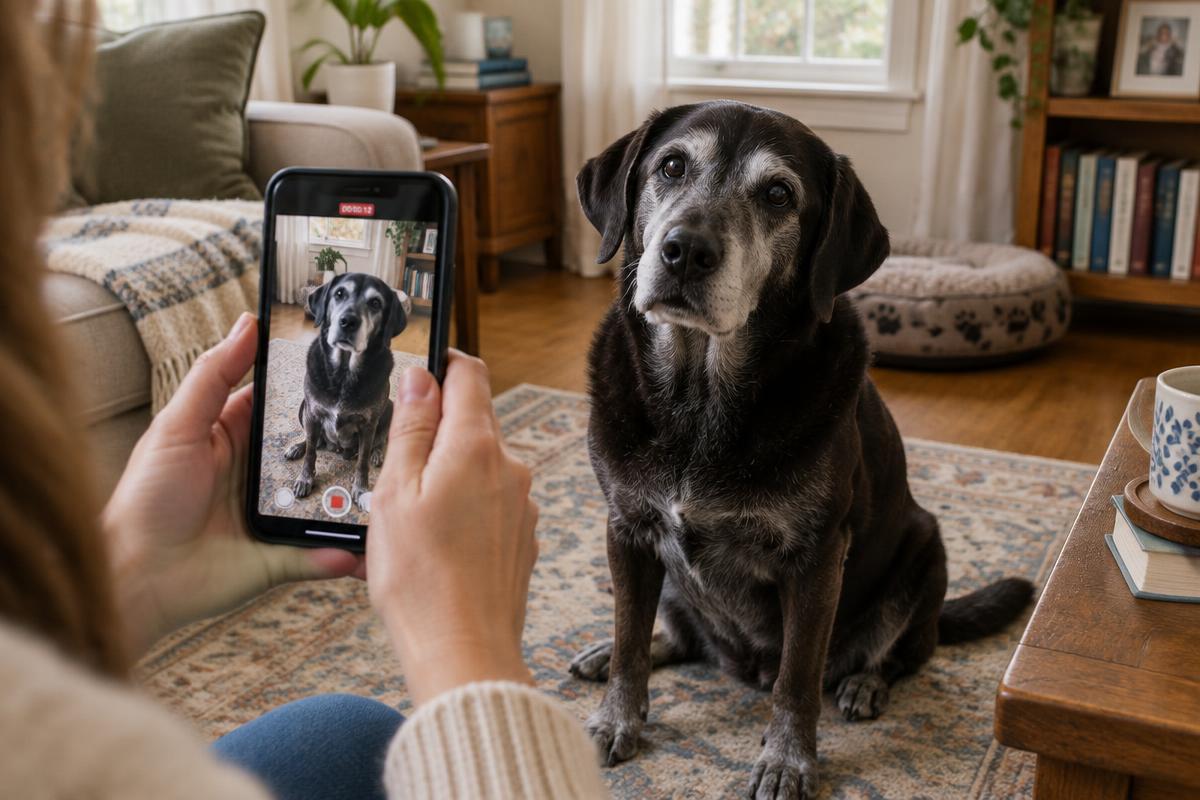
Catching Cognitive Decline Early: A Practical Guide for Senior Dog Owners

Canine Cognitive Dysfunction (CCD) is the closest analogue we have to Alzheimer's in dogs. By the time the symptoms are unmistakable — disorientation in familiar rooms, reversed sleep cycles, loss of housetraining — the underlying changes have been accumulating for months.
The early signals
Owners often describe a vague sense that their dog "isn't quite themselves" before any single symptom is severe enough to mention to the vet. Pay attention to:
- Hesitation at familiar thresholds (doorways, stairs).
- Subtle changes in how the dog greets you after a short absence.
- Longer latencies on problem-solving tasks they used to ace.
A Dognition reassessment every six months from age nine onward is a low-friction way to spot the third signal before you'd notice it in daily life.
What helps
The evidence base is strongest for three interventions, ideally combined: enriched diets (notably medium-chain triglycerides), structured cognitive enrichment, and consistent daily routines. None of this is a cure. All of it buys time.