Better Humanity Through Dog Relationships
If we are really going to the dogs, that may not be such a bad thing. In a February 2026 Voyages of Discovery lecture at East Carolina University, Duke evolutionary anthropologist and psychologist Dr. Brian Hare argued that the same forces that domesticated dogs are the same ones that can help humanity build a friendlier future. His talk, "Bettering humanity through the evolution of 'human's best friend,'" drew a direct line between the evolution of dogs, the psychology of our closest primate relatives, and the social glue that holds human communities together.
From wolves to partners
Dogs are not merely tame wolves. Over thousands of years of co-evolution with humans, they developed a remarkable ability to read our gestures, words, and intentions. Hare calls this a form of shared intentionality — the capacity to understand that another being has goals and to cooperate toward those goals. It is the same psychological ability that allows humans to build cultures, schools, and democracies. In other words, dogs became our friends because they learned to think with us.
This co-evolution is what makes dog relationships so scientifically interesting. A dog does not just tolerate humans; it actively tries to solve problems with us. Whether it is finding a hidden toy, navigating an obstacle, or calming a nervous owner, dogs demonstrate a level of cooperative cognition that is rare in the animal kingdom. That cooperation is not trained into every dog from scratch; it is part of the biological legacy of domestication.
What bonobos and chimpanzees teach us
Hare used our closest relatives to make the contrast sharp. Bonobos, like humans, tend to help strangers and share food because they enjoy making new friends. Chimpanzees, by contrast, often fear outsiders and react aggressively. The difference is not random; it is evolutionary. Female bonobos, for example, have been observed rejecting aggressive alpha males in favor of less aggressive partners, gradually favoring friendlier tendencies in their species. Hare suggests that a similar process has occurred in human evolution: attraction has replaced fear, and cooperation has outcompeted isolation.
The lesson for humanity is not sentimental. Friendliness is a survival strategy. Species that can form broad social bonds, cooperate across family lines, and build shared identities outlast those that cannot. Dogs are Exhibit A for how quickly that strategy can reshape a species — wolves became dogs not by becoming smarter, but by becoming friendlier.
Puppies as a model for service and society
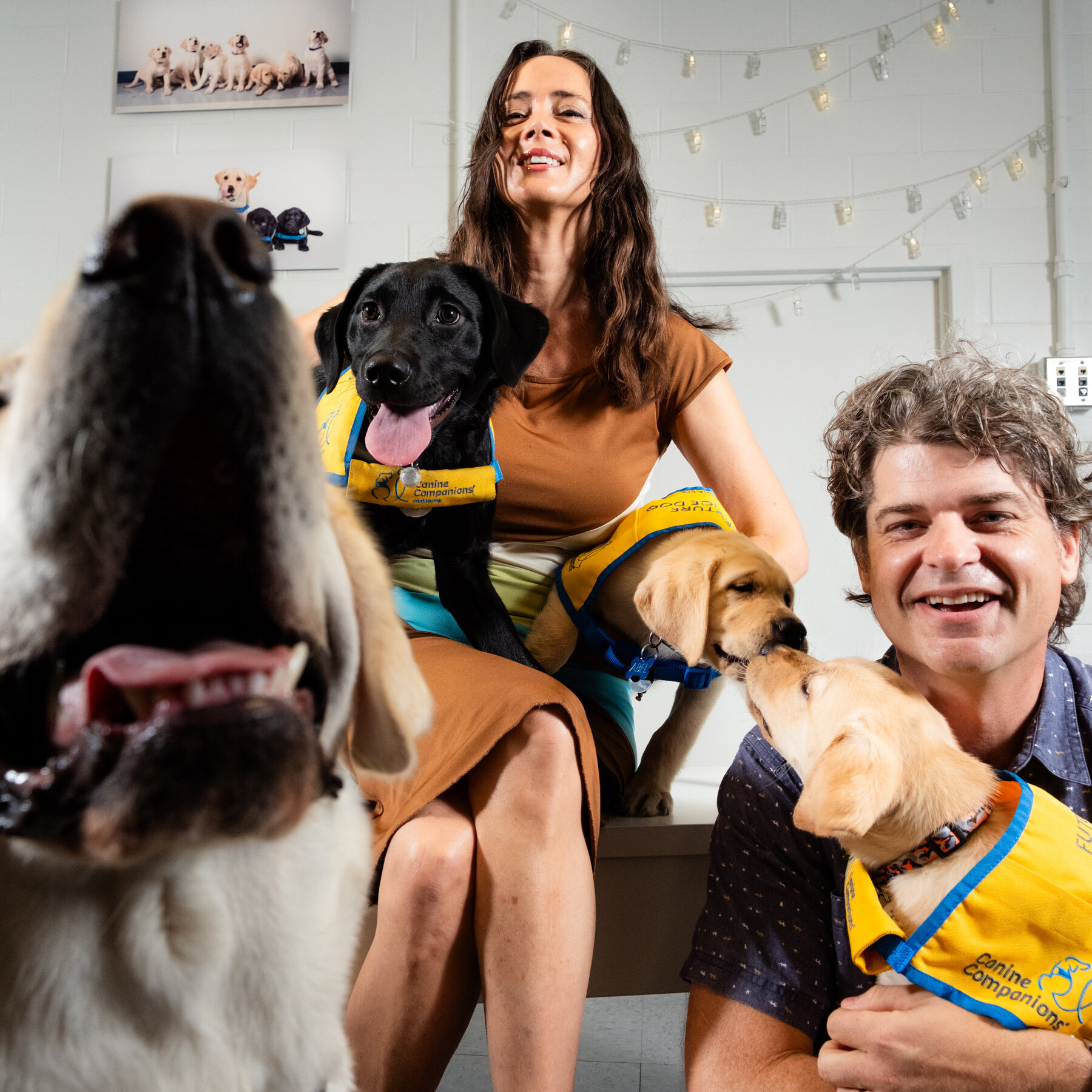
Hare also discussed his research on puppy kindergarten, a program inspired by service dog training. Service dogs change lives for veterans with PTSD, people with diabetes, autistic individuals, and many others. Yet only about half of the dogs who enter service training graduate. Hare's seven-year study found that the traits that make a good service dog — cooperation, calmness, responsiveness to human cues — are already visible before a puppy reaches sixteen weeks of age. The right psychology can be identified early, but it cannot be manufactured in every dog.
This finding has implications far beyond training programs. It suggests that the building blocks of a cooperative society are present early and must be cultivated, not forced. If we want friendlier adults, the environments we create for young humans and young dogs matter enormously.
Why dog relationships make us better
Living with a dog is a daily exercise in empathy, communication, and patience. A dog cannot tell you in words what it needs, so you learn to read body language, tone, and context. You learn that trust is built through consistent care, not dominance. You learn that cooperation works better than coercion. These are the same skills that underpin healthy human relationships, workplaces, and communities.
The research Hare shared at ECU reinforces something dog owners have long felt intuitively: our relationships with dogs are not a distraction from human connection. They are practice for it. Every time a dog responds to a gesture, every time a nervous shelter dog learns to trust, every time a puppy and a child figure out how to play together, we are rehearsing the very behaviors that make human society possible.
Building a friendlier future
Hare's closing message was hopeful. "Friendliness wins in life," he said. "The most successful stories on Earth are ones where fear was replaced by attraction and new forms of cooperation were born. Our dogs are Exhibit A, but our past tells the same story."
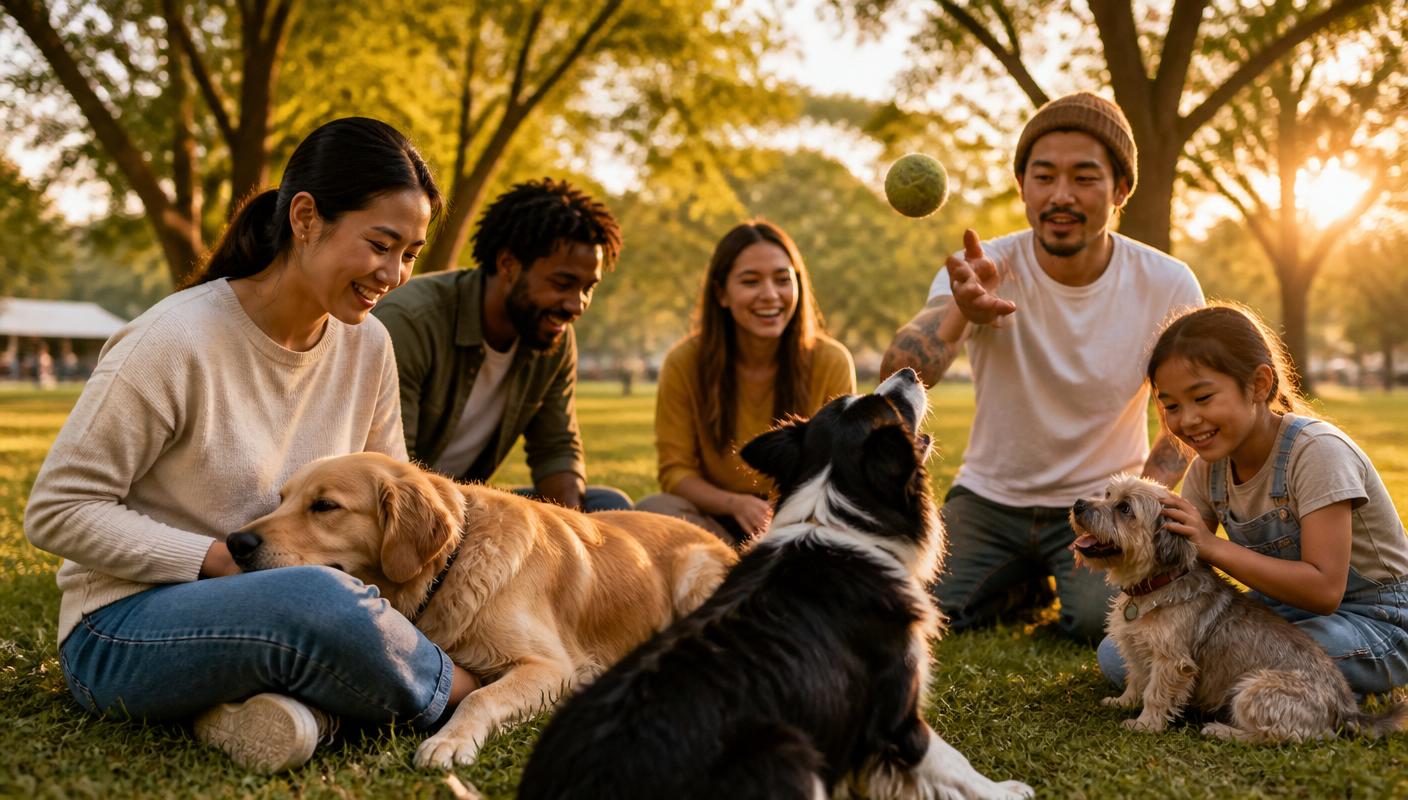
At Dognition, we see this every day. When owners play cognitive games with their dogs, they are not just entertaining them; they are strengthening a shared mental model. When communities build dog parks, they are creating spaces where strangers become neighbors. When workplaces allow dogs, they are signaling that trust and cooperation matter more than rigid control. Better humanity through dog relationships is not a slogan. It is a hypothesis backed by evolution, neuroscience, and the daily behavior of millions of dogs and their people.